{ font: $(body.font); color: $(body.text.color); background: $(body.background); padding: opx; $(body.background.override) } expr:class='"loading" + data:blog.mobileClass'>
Showing posts with label Female Author. Show all posts

Friday, November 20, 2015

"Pandora in Blue Jeans" - Peyton Place

During the 1970's, my father had a friendship with George Metalious, and he had visited our home in Poultney.  I believe that Dad had met him through their mutual careers in education.  I remember him as a black haired man with streaks of silver,  he wore a mustache, beard and glasses.   At the time, I had no idea that this man's [deceased] wife had been the world famous author, Grace Metalious, author of the controversial novel "Peyton Place".  I never met Grace, for she had died the year I was born.  Next year will mark the 60th anniversary of the publication of this novel, that was an international smash.


George Metalious
Upon publication of her novel, in September 1956, she became an overnight sensation.  The book hit the New York Times bestseller list, and stayed there for 59 consecutive weeks.  It sold over 32 million copies in both hard cover and paperback.  It sold 60,000 copies within the first ten days of its release!  It was adapted as a 1957 film; albeit, tamed,  and after that, it became a hit 1964–69 television series.


Her life began under difficult conditions, and ironically, read a bit like her own novel.   Grace Metalious was born Marie Grace de Repentigny on September 8, 1924, in Manchester, New Hampshire.  Her family was of French Canadian descent.  She was raised in a very poor and broken home in Manchester, New Hampshire.  At age 11, her father "walked out" on the family leaving behind Grace with her mother and 2 sisters.  Grace's own mother attempted to hide their heritage and moved her family into neighborhoods with less Franco-American populations.  Her mother believed that by doing so, her children may be provided with better opportunities.

"Anxious for Grace to better herself, her mother insisted upon their living in neighborhoods in which there weren't many French Canadians, one of the last groups to emigrate to Manchester and thus, located far down on the social totem pole. From her mother, Grace learned first-hand about dissembling and hiding secrets, the revelation of which would lie at the heart of her first and most famous novel, "Peyton Place."  ...The Catholic Church frowned on divorce and ...made it very difficult for a person who was a Catholic to obtain one and remain a member of the faith in good standing. This meant that it was very unusual for a married French Canadian couple to legally dissolve their marriage in the first half of the last century. Grace and her sisters felt shame, shame for coming from a broken home and shame from the resulting social stigmatization, a psychological state underscored and deepened by the social, economic and political inferiority of the French Canadians by the Yankees ." - Source: imbd


In spite of her social status, or perhaps because of it she began to write at a young age.  She was known to lock herself in a bathroom so that she may employ her over active imagination. 


She had met George, who was younger than her, at Central High School, in Manchester.  George was known for his great intelligence, and had been advanced a grade.   The family was not exactly supportive of her choice in men, as George was of Greek descent and held a different faith, from their own.  After High School, she lived with George - meaning they did not get married right away -  which at the time, was quite scandalous.  They eventually did marry, in a Catholic Church in that same town.   The family objected, but in 1943, love prevailed.  Their first child was born, less than 8 months later.


George and Grace Metalious
After having served his country, George attended UNH in Durham, where the couple had moved.  After graduating college, George worked the day shift at a local mill, and Grace worked nights. Grace had discovered that he was cheating on her, so she did decided to return the favor.  


As time marched on, they had 2 more children while living in extreme poverty.  It was during all of this, that Grace became a serious writer.  Apparently, she had a great disregard for housework, and for being a housewife in general, much to George's chagrin.   In one article I read, while researching for this post, it (with no running water) was a "pig sty".  Apparently, Grace could only be bothered to clean the space in a corner where she had kept her typewriter to write.  George had wanted an ordinary home with an ordinary housewife, but Grace would have nothing of it.


Grace Metalious
To credit Grace's writing, during these times, one must take into account the fact that she wasn't actually writing for sensation-ism.  It took real guts to write about sex, violence and scandal.  Her writing was intended to be a social statement mostly about hypocrisy, and it ended up blowing the lid off of topics that the general population held as taboo.   She wrote from "first hand knowledge", upon growing up in a world of poverty, lies, and dirty secrets.  Her inspiration was somewhat her flat-out reality.


It is said that Grace was inspired by a real-life murder that had sensationalized the town where she now lived, in Gilmanton [Ironworks], New Hampshire about a decade before she began writing the book, were a young girl had shot her father because he had been molesting her.  To hide the murder, she hid his corpse in a barn.  Grace began working on the first draft, and at the end of 10 weeks, in 1955, she completed a book entitled, The Tree and the Blossom, but upon looking at a map, she and George changed the title to it's legendary, fictional name.  The novel's name and fictional location was forever after known as "Peyton Place".  


Her writing style is considered brilliant - how she worked the dialogue, descriptions, and how she used narrative lines -  to connect the different families and their stories.  In the novel, she wrote about abortion, rape, domestic violence, homosexuality, unwed mothers, suicide, incest and murder.  These topics were not found in the mainstream novels being published of the day, with the possible exception of Lolita.  


Every major publishing company rejected the book, and it was a female publisher at Julian Messner and Company, by the name of Katheryn G. Messner, who saw an opportunity and gave the green light to print it.  Upon publication it was the 2nd largest selling book - second only to Gone With The Wind.  Those who bought the book, hid the cover in public, or read it in secret, but they read it....


 From here on, George and Grace's relationship was tumultuous, and had more scandals of their own.  After the publication of Peyton Place, both George and Grace had affairs, and they separated several times. George became a principle at the High School in Gilmanton, New Hampshire.  Also during this time, each had extramarital affairs. It was documented that George crept into his old house to photograph her in bed with a lover.  


She bought a fancy home and then became involved with her manager, Thomas J. Martin, (known as T.J.) before she was divorced.  Her divorce from George was finalized on February 25, 1958.    Just 3 days later on February 28th, (another source indicates it was March 1st) she married T.J. and this marriage only lasted about 20 months.  T.J. was a disc jockey in Laconia at that time. 


 She would leave him to go out on drinking binges for weeks at a time, and their relationship was unstable.  This ultimately lead to divorce on Oct 6, 1960.   During these times the children were shuffled between the George and Grace.  


Eventually, she went back to George, in 1960 when he was living on Martha's Vinyard and they remarried on Oct 12, 1961.  George was there to take care of her, as she was deeply in the throws of alcoholism.


The town of Gilmanton, New Hampshire was outraged at the publication and many felt shamed. Grace was threatened with lawsuits for libel and the town refused to purchase the book for it's own library. George suffered, too, as his contract as school principle was not renewed.  But contrary to what is believed, he was let go due to different reasons - before the book's publication.


Grace made this caustic comment regarding the township in which she lived: "these towns look as peaceful as a postcard picture … beneath that picture it’s like turning over a rock with your foot — all kinds of strange things crawl out … everybody known what’s going on … but they don’t want outsiders to know..."

As I mentioned, her wildly popular book went on to become a movie, and later a television series.  Both are said to have softened the edges of the actual novel. 


Grace was known for wearing men's clothing and her marketing publicists dubbed her "Pandora in Blue Jeans".  In most of the photographs that we see of her, she is wearing denim pants. When she showed up in New York City, wearing her a dreary style of garb, her publicists were rather taken aback.  I guess you could say she was a no nonsense kind of girl, and stuck to her own principles and ideals.


At around 1962 she was back with George, and "swore off the bottle" for about a year, and published another book entitled The Tight White Collar and was well received by reviews.  As her alcoholism grew, she wrote Return to Peyton Place but it never had the success of her first novel.  She also wrote No Adam in Eden which was heavily criticized by her New York publicists, as easily being her worst work.  


Grace felt the pressure of her life weighing her down around her like a noose made of lead.  It is believed she committed a slow suicide by drinking.  Those close to her, grew frightened of her and especially afraid to mention her drinking problem.  She became reckless leaving her children with others, while she continued to drink and essentially forgot them, so those left responsible would have to drive them home.  She missed major appearances and one can only imagine that she was in a bitter world of her own. George had truly tried, but the bottom line was that he had finally had enough and left Grace, for good.


To add insult to injury, Grace Metalious never became rich from writing Peyton Place, as she did not maintain money from any of her publications.  In fact, her agent plundered most of her income and at the time of her death, she was penniless and in debt.


Early in life, the Pandora in Blue Jeans had had health issues, especially during childbirth.  Upon the birth of her first child, her physician advised her not to have any more children.  She kept this knowledge secret from George and painfully had 2 more children.  After the 3rd child was born, she finally conceded to have her "tubes tied." 


Grace had also been generous, after Peyton Place hit the book stands.  Fair-weather friends and family crawled out of the woodwork to ask her for money.  Never hesitating, she freely wrote checks out to anyone indicating that they were in need.

At the end of her short life; and, with her husband and money gone, Grace was associated with a British journalist working for the Boston Mirror.  His name was John Rees.  At the time, Rees apparently had a wife of 15 years, along with 5 children but had reported to others that he was single.   His disgraceful behavior deeply embarrassed his wife, Anthea, who only had knowledge of his friendship with Grace in a professional capacity.   Apparently, he had told his wife that he was in the states to obtain a job with the newspapers.  Rees had been present at the hospital at the time of Grace's death, when the doctor quietly told him that she had died at 10:30 a.m.

Grace had died from cirrhosis of the liver at Beth Israel Hospital in Boston on Tuesday, February 25, 1964.  She was only 39 years old. 

Just hours before her death, Grace had changed her will to leave everything to Rees; but, thankfully, the Metalious family was eventually able to reverse this.  Little did it matter in the end, (as previously mentioned) she died heavily in debt.  She had received no royalties for her movies or the television series.  

One of her final wishes was that the family not hold a funeral for her, as she wanted her body to be donated to science, but Harvard refused it in the midst of prevailing lawsuits.  The most prominent legal matter in which the New Hampshire court ruled that her funeral would be held, is known as Holland vs. Metalious, which set a legal precedent that the rights of the body of the deceased belong to the family.  (Attorney, John Holland was the Executor of the Estate).  The family held a funeral, where the children witnessed their father weeping as they knelt near the casket. 


Her body was placed in a vault in the Smith Meeting House Cemetery in Gilmanton, and her burial had to wait until the following Spring when she could be buried, as the ground was frozen at the time of her death.  It is said that the family had received several phone calls stating that they did not want "that bitch" buried in their town. 

One thing that is apparent, is that Grace's presence both while living and posthumously, left an indelible mark in the town of Gilmanton and around the world - whether for good or ill - she opened the door to feminism and boldly went were no woman had gone before.


Story and research by Denise Goodwin, All Rights Reserved.  
November 20, 2015
All photo credits:  Google Images / Pinterest


Friday, September 26, 2014

Happy Birthday, Vermont DeadLine!

HAPPY ANNIVERSARY!!!


Vermont DeadLine 
is celebrating 1 year online!


My, my how time has flown! Yesterday, I realized that I began this website in September of last year. 

To anyone and everyone who has read this blog, I thank you dearly and hope that you have enjoyed this blog's content!

An Embarrassing Confession:

I want to tell you the truth - that just now - just this morning - I discovered the many comments that have been left - my apologies for not responding.  To tell you the truth, I disallowed the email notifications and had absolutely no idea that I had so many responses, and just learned that I can view them in the layout section of Blogger!  

I will be posting some of these comments, because the content is amazing.  Again, my humble most apologies for not responding - I never even noticed them until today!  I will be returning messages over the weekend.


Personally, it has been an amazing year!  Russ and I were married on May 31st and, later in the summer I changed jobs - something I had not planned - and ended up a State employee!  


My very first post was a huge endeavor of typing out epitaphs that I had personally collected from various locations around Vermont, and then posting a picture between every epitaph!  I can't help but mention that the coolest, most obscure and interesting "last words" were found on back roads in the hills of Orange County.

As you know, the focus of this blog has been the dark, mysterious and the obscure stories that are based on either fact, folklore or legend.  I have had a blast collecting what I call "blog fodder", and still am seeking more stories, tales and photographs from the "dark side" of our Green Mountains.  


I am also interested in gaining "legal entry" into any abandoned houses, buildings or places that you may know of, for the purpose of photographing its interior and contents.  Please contact me if you know of any!  Please contact me!

vermontdeadline@gmail.com

Remember, October is right around the corner, so I will be focusing on Halloween (Samhain) and all that it is creepy, scary and mysterious!


If you are seeking specific content on this blog, please scroll down to the bottom of the page, and you can view all of the labels that have thus far been posted.

Again, thank you all for reading Vermont DeadLine!  


Brightest Blessings

Visit often

Stay long,

With Love and Light Darkness,

~Denise


Tuesday, November 12, 2013

I Will Get There, Some Day!

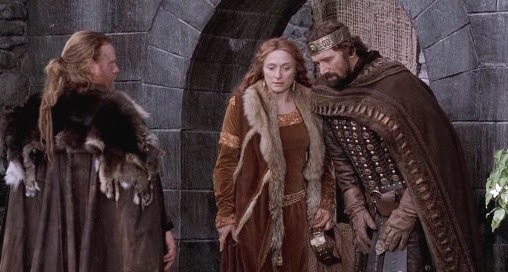
Cast from the movie, "The Mists of Avalon" 
Years ago, I read the book The Mists of Avalon, which forever changed my life!  The story is told from Morgan Le Fey's point of view, and it deliciously weaves (historical and fantasy) layers and decades of deception, love triangles, war, all with the underlying battle between Druid and Christian.  


There are few places on earth that can stir my imagination and my fairy-tale, romantic notions more than Tintagel Castle.   Set on the rugged coast of North Cornwall, England, Tintagel is steeped in mystery and legend; with a history dating back to the Roman occupation of England.  


The castle is reported to be the site of the conception of King Arthur; and below the castle lies the great magician's cave of Merlin, which can be accessible at low tide.


TINTAGEL CASTLE HISTORY

"Even before Richard, Earl of Cornwall, built his castle, Tintagel had come to be associated with the conception of King Arthur. 


During the summer months, a story-teller is often on hand to bring the legends of King Arthur, Guinevere and Lancelot to life. In the bleak mid-winter, Tintagel is a place that inspires the imagination of writers and poets. It's a place of dreams, romance and legend.


In June 1998, excavations were undertaken under the direction of Professor Chris Morris of the University of Glasgow, on a relatively sheltered and small site on the eastern side of the island, first excavated in the 1930s. 


Pottery from the 5th and 6th centuries was found, as well as some fine glass fragments believed to be from 6th- or 7th-century Málaga. 


Even more remarkable was a 1,500-year-old piece of slate on which remain two Latin inscriptions. The second inscription reads: ‘Artognou, father of a descendant of Coll, has had [this] made.’ Who exactly Artognou was continues to be a subject for lively speculation." 


Tintagel Castle is set on a dramatic and picturesque headland that is virtually an island, connected to the mainland by a slim finger of land. Over the centuries much of Tintagel castle has fallen into the sea and very little remains today."

TINTAGEL

"Tintagel Castle is famous for its association with the legend of King Arthur, who was said to be born on Tintagel Island where the remains of the 13th century Castle stand today.


With its spectacular location on one of England's most dramatic coastlines, It is an awe-inspiring place to visit and soak up the atmosphere generated by the dramatic views and wonderful legends.

Below the castle on the Castle Beach is Merlin’s cave which is accessible at low tide.

Merlin's Cave
The coastline around Tintagel is significant because it is composed of old Devonian slate; about a mile southwards from Tintagel towards Treknow the coastline was quarried extensively for this hard-wearing roofing surface.

The turquoise green water around this coast is caused by the slate/sand around Tintagel which contains elements of copper: strong sunlight turns the water a light turquoise green color in warm weather.

The Castle was built by Reginald, Earl of Cornwall on Tintagel Head, where according to Cornish legends the ancient Kings of Cornwall held their court. Tintagel castle was built for propaganda purposes and had no real strategic value.

Stained glass window in St Mary's Church, Wales,
containing the image of Geoffrey of Monmouth.
It was claimed by Geoffrey of Monmouth in the 12th century that the castle at Tintagel Head was where King Uther Pendragon seduced Queen Igraine of Cornwall, while her husband, Gorlois, was under siege elsewhere. King Arthur was thus conceived and later writers made the castle his birthplace."

King Uther, Lady Igraine and Corlois

TINTAGEL CASTLE - CORNWALL

"Tintagel Castle stands on windswept cliffs in North Cornwall on one of England’s most dramatic coastlines. The Castle is believed to be the birthplace of King Arthur who, as legend has it, was protected from the evil magician Merlin by his magical sword, Excalibur. 


Tintagel Castle is an awe-inspiring place to visit and soak up the atmosphere generated by the dramatic views and wonderful legends. Today, the remains of Tintagel castle stand on rugged cliffs high above the sea.


Many claim that Tintagel is one of the most romantic places in the UK, with beautiful walks along the Cornish Coast."  Source: http://www.tintagelcastle.co.uk/

Monday, November 11, 2013

From Vermont to Cell # R-2-S-8 - Ted Bundy

"Ted Bundy" was born as Theodore Robert Cowell at the Elizabeth Lund Home For Unwed Mothers, in Burlington, Vermont, on November 24, 1946.  The home was originally built as a "Home for Friendless Women" in 1890.  


Actual photograph of babies a the Lund Center
Today it is known as the Lund Center. His mother's name was Eleanor Louise Cowell, always referred to as "Louise".  It is interesting to note that his he was not raised by Eleanor, and was brought up believing that she was his older sister.  


Bundy with his mother

Bundy's maternal grandparents posed as his parental guardians.  He did not learn his mother's true identity until he was in college, and presumably, this deception was ultimately to protect the child from the social stigma attached to unwed mothers.


The Elizabeth Lund Home for Unwed Mothers
"The identity of his father has never been determined with certainty. His birth certificate assigns paternity to a salesman and Air Force veteran named Lloyd Marshall, but Louise later claimed that she was seduced by "a sailor" whose name may have been Jack Worthington. 


"Louise" Bundy
(Years later, investigators would find no record of anyone by that name in Navy or Merchant Marine archives.) Some family members expressed suspicions that the father might actually have been Louise's own violent, abusive father, Samuel Cowell, though there was no direct evidence to support such speculation." -Wiki

Later, Louise moved to Pennsylvania  and became involved with a man and changed Ted's surname from Cowell to Nelson.  During his high school years, Louise then relocated to Tacoma, Washington and met Johnny Culpepper Bundy during a church function.  After they were married, Johnny adopted Ted, which changed his name yet again to Theodore Bundy.  


Little Ted
"Ted remained distant from his stepfather. During high school, Ted was often isolated from other kids his age. He couldn't seem to understand teenage social behavior but was skilled in "faking it", indicating a propensity towards psychopathy." 


Young Bundy
Ann Rule, Bundy's biographer and true crime writer that personally knew him and worked with him, believes that he discovered his own original birth record in Vermont in 1969.  Apparently, it is recorded that Bundy expressed "a lifelong resentment toward his mother for lying about his true parentage and leaving him to discover it for himself".


Norman Bates

Ted Bundy


Some strange facts about Ted Bundy:

He showed violent tendencies as young as three years old:   His mother's sister, Julia, awoke from a nap while babysitting the child, only to discover that little Teddy had surrounded her with an array of kitchen knives, raising her eyes to see the smiling toddler looking back at her.

It is reported that his grandfather Samuel (known to Bundy as his father, at the time) abused the family dog, swung local cats around by their tales, and tortured animals.

Bundy' grandmother was described as a shy woman who underwent electro-convulsive therapy for depression and was most likely agoraphobic, fearing to leave her own home. 

As a child, Ted tormented animals with knives.  He mutilated them with the knives which seemed to fascinate him so much.

Young Ted served as Vice President of the Methodist Youth Fellowship.

He was a  Boy Scout. 

His criminal activities began before he finished high school.

He was a constant and habitual liar.  

He compulsively shoplifted.   He was arrested (at least twice) as a juvenile for automobile theft and burglary, but upon reaching the age of 18, Washington State laws expunged the records.  

He was involved voyeurism from a young age and peeped into unsuspecting windows.   In college, he was known to "canvas the community" in search of open windows into which he could observe women undressing. 

He majored in Psychology in University and graduated with a degree in 1972 and graduated with honors.

Eerily, part of his psychology studies involved volunteering at a Suicide Crisis Center; where he became friends with his future biographer, Ann Rule, who wrote the book "Stranger Beside Me", detailing Bundy's crimes.  Ironically, at this time, she was unknowingly researching crimes that had been committed by Bundy.

He started taking classes upon his graduation from high school in 1965 in Psychology and Oriental Studies.  
He volunteered at a suicide crisis center alongside his now biographer, author, Ann Rule.

Ted was a staunch Republican, and in 1968 managed Seattle's Presidential campaign for Nelson Rockefeller, during which time he attended a Republican Convention in Miami, Florida.  Later, he was caught spying on and taping speeches by the Democrats, then later reporting back to his Republican peers.

He was a necrophiliac, often revisiting the murdered bodies of victims to engage in sexual activities with their corpses.

WIFE AND DAUGHTER

While researching information for this blog, I learned that Ted Bundy was married while on death row, which resulted in the birth of his only biological child. 


During the summer of 1974, Bundy secured employment in Olympia, Washington at the state Department of Emergency Services where he met Carol Ann Boone, whose personal life was in shambles, having recently lost a close uncle; she was a single Mother trying to raise a son, (named Jamey) and was involved in a sloppy love affair.


Carol Ann Boone

Bundy was suffering from relationship woes, as well, with his long-time, long- distance girlfriend, Liz, (Elizabeth Kloepfer) who lived in Utah, and whom he met in 1969.  They had been together for some time, and she wanted a deeper commitment from him, and their geographical barriers made Liz feel insecure and questioned his truthfulness concerning the possibilities of external, sexual affairs.  


Bundy with Elizabeth Kloepfer
Liz had reason to be uneasy, as over the course of time, Bundy had left strange things in her apartment that included, among other things, a container of Plaster of Paris, surgical gloves, and crutches.  While with her, his sexual drive waned, and his bizarre behavior began to really frighten her.   Bundy confirmed that he had dated at least a dozen women outside of his relationship with Liz.


Wiki states, "During the penalty phase of the trial, Bundy took advantage of an obscure Florida law providing that a marriage declaration in court, in the presence of a judge, constituted a legal marriage. As he was questioning former Washington State DES coworker Carole Ann Boone—who had moved to Florida to be near Bundy, had testified on his behalf during both trials, and was again testifying on his behalf as a character witness—he asked her to marry him. She accepted, and Bundy declared to the court that they were legally married."

Another site tells that "Carole Boone, whom Bundy cruelly encouraged to believe him innocent until just before his 1989 execution. Boone married Bundy after he was condemned to death we helped engineer [a] courtroom coup." 

Incredibly, in October 1982, Boone gave birth to a daughter (whose name and current location, thankfully, are not known) and Bundy's name was given as the father.  

HOW DID THIS HAPPEN IN PRISON???

Conjugal visits were not allowed, inmates were known to "pool their money" in order to bribe guards to allow them time alone with female visitors.  Names were drawn from a hat, usually pooling around $60.   It is reported that a guard would let the "winner" go into a closet with his lady.  The guard on duty would take the money, and apparently this is how the child was conceived.    

Ted Bundy was executed at Raiford Prison in Starke, Florida, on January 24, 1989. His wife, Carole Ann Boone, had divorced him three years earlier. The child they had together, allegedly conceived in the Visiting Area of Death Row, is about 29 now. 

VERMONT - UNSOLVED MURDER


Rita Curran
Several Internet sites give the same report about most criminal experts belief that Bundy was responsible for the brutal murder of Rita Curran.  Strangely, like Bundy, Rita was also born in Burlington, Vermont on Jun. 21, 1947.  Rita was known as a shy and reserved person, who was quite lovely.  She had long brown hair, that she chose to part either on the side or the middle.  

She had graduated from Vermont's Trinity College and worked during the school year with handicapped and special needs children.  Though she was 24 years old,  she had lived with her parents in Milton, Vermont, up until the summer of 1971.  At that time, she shared an apartment with a female room-mate on Brooks Avenue, in Burlington, Vermont.  She had frequently joked to her friends that all the bachelors in town had been taken; but, in more serious conversations, she yearned to be married, with children of her own. 

Ann Rule spent considerable time in researching the "whereabouts" of Ted Bundy from 1969 to 1971.  He was a consummate traveler and loved the fact that no one knew when or where he would show up next.  This also opens the door to many more unsolved murders, where Bundy will only account for 30 murders.  It is quite disturbing to think that the actual number could be much, much higher.  As Mrs. Rule states:  "some [questions] may never be answered and some provoke more and more questions in an endless continuum," regarding the possibility of Bundy murdering 36 women in 6 states.  There are significant missing periods of time where his whereabouts cannot be pin pointed.  

One of those times for which Bundy cannot be accounted, was when Rita Curran was found murdered.  This was shortly before that he had told his co-worker, Ann Rule, that he was personally "going home"  to "find out who he really was."  There are gaping holes of time for which no one can account, and he could have easily have traveled to Vermont.  There are simply  too many common threads between this murder and many others, which are attached to Bundy.  


Bundy's car is on display at a crime museum
Bundy, feeding on his stardom for the police, reporters and psychologists, only left proverbial white bread crumbs in the snow.  We will probably never know what happened to poor Rita, but the most compelling story (frequently repeated) follows: 


"Rita Curran, a 24-year-old elementary school teacher and part-time motel maid, was murdered in her basement apartment on July 19, 1971 in Burlington, Vermont; she had been strangled, bludgeoned and raped. The location of the motel where she worked (adjacent to Bundy's birthplace, the Elizabeth Lund Home for Unwed Mothers) and similarities to known Bundy crime scenes led retired FBI agent John Bassett to propose him as a suspect. No evidence firmly places Bundy in Burlington on that date, but municipal records note that a person named "Bundy" was bitten by a dog that week, and long stretches of Bundy's time—including the summer of 1971—remain unaccounted for. Curran's murder officially remains unsolved."

Rita Curran was murderd at 17 Brooks Avenue, in Burlington, Vermont at the age of 24.  She was the daughter of Thomas and Mary Curran, and was raised in Milton, VT.  At the time of her death, she was survived by her parents and a sister Mary and a brother Thomas.

CHANGLING ~ The Chameleon

Posted on an Internet forum by a "man who used to work with him" (the natural assumption would be a prison guard):  "He also was like a chameleon in that he seemed to be able to frequently change his appearance. One day his hair seemed curly or parted on this side, then the next day it seemed straight or parted on the other side, or his eye color seemed different etc. I have also seen him make the scary eyes and face that some of his living victims told of. He seemed to like to manipulate people a lot, and very much enjoyed the celebrity status he had. He worked out a lot in his cell (push ups, sit ups and rapid pacing). He smoked, and solicited money for canteen and smokes from people who wrote him."


"Significant obstacles for law enforcement were Bundy's "generic", essentially anonymous physical features, and a curious "chameleon-like" ability to change his appearance almost at will. Early on, police complained of the futility of showing his photograph to witnesses; he looked different in virtually every photo ever taken of him. In person, "... his expression would so change his whole appearance that there were moments that you weren't even sure you were looking at the same person," said Stewart Hanson, Jr., the judge in the DaRonch trial. "He  really a changeling." Bundy was well aware of this unusual quality and he exploited it, using subtle modifications of facial hair or hairstyle to significantly alter his appearance as necessary. He concealed his one distinctive identifying mark, a dark mole on his neck, with turtleneck shirts and sweaters." -epubbud.com


"A great-aunt witnessed an episode during which Bundy "... seemed to turn into another, unrecognizable person ...  suddenly, inexplicably found herself afraid of her favorite nephew as they waited together at a dusk-darkened train station. He had turned into a stranger." A prison official in Tallahassee described a similar transformation to Lewis: "He said, 'He became weird on me.' He did a metamorphosis, a body and facial change, and he felt there was an odor emitting from him. He said, 'Almost a complete change of personality ... that was the day I was afraid of him.' " - epubbud.com

SWEET JUSTICE 


Theodore Bundy, after execution
"Ted Bundy died in the Raiford electric chair at 7:16 a.m. Eastern time on January 24, 1989. Several hundred people sang, danced, and set off fireworks across the street from the prison as the execution was carried out. Cheering loudly [as] Bundy's body departed the prison. His remains were cremated in Gainesville.  His remains were scattered at an [unknown] area of Washington State."

Mental Floss adds:  "Bundy’s trial was the first to be televised nationally, and it didn’t end well for him; a guilty verdict brought him two death sentences, with a third following six months later after a separate trial in Orlando."


PHOTO CREDITS: all photos obtained on Google Images.