{ font: $(body.font); color: $(body.text.color); background: $(body.background); padding: opx; $(body.background.override) } expr:class='"loading" + data:blog.mobileClass'>
Showing posts with label Curse. Show all posts

Saturday, June 11, 2016

Vampire Defense


“Evil is a point of view. We are immortal. And what we have before us are the rich feasts that conscience cannot appreciate and mortal men cannot know without regret. God kills, and so shall we; indiscriminately He takes the richest and the poorest, and so shall we; for no creatures under God are as we are, none so like Him as ourselves, dark angels not confined to the stinking limits of hell but wandering His earth and all its kingdoms.”  ― Anne Rice, Interview with the Vampire


The vampire is a loathsome creature, who appears in human form, and is sustained by drinking the blood (also known as "feeding") from living beings, like you and I.   Naturally, we want to defend ourselves from an immortal existence and there are many ways in which we can employ self-protection.


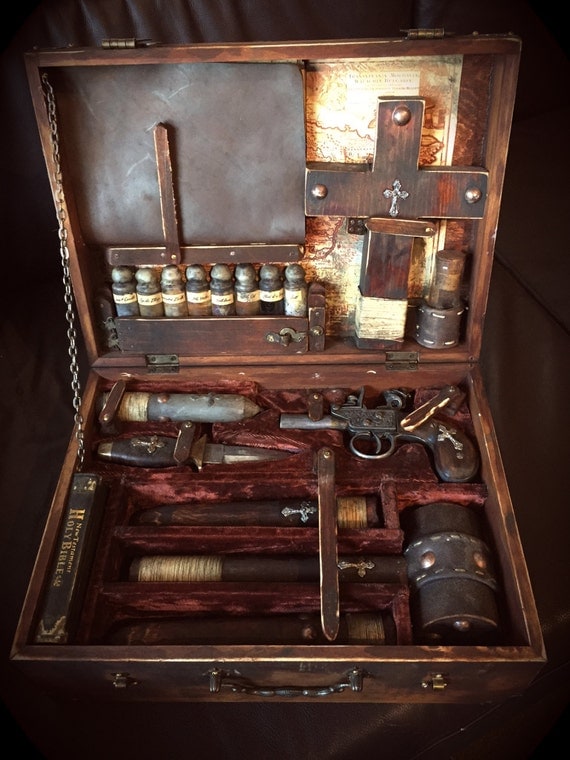
Today, one can easily find, online at auction or generally for sale, "Vampire Hunter Kits" - also known as - "Vampire Defense Kits".  Some kits may be vintage, but are not actually an authentic tool used during the height of this superstition.   These kits are most likely made in the 1930's or perhaps even later and were made to look older than they actually are.   These kits can even be "made to order", today.  Speculation is that they were produced after the publication of Bram Stoker's "Dracula" in 1897, and were more likely intended as souvenirs or novelties.    Buyer, Beware!


If the contents were indeed real, here are the many ways in which you may use to defend yourself against the un-dead. There are also many superstitions that may grant you some form of protection against these evil beings.  

"Apotropaics" or apotropaic magic are a means in which one may defend against evil or harm, and may deflect misfortune.  If you have a lucky charm, or sprinkle salt over your shoulder, or hang a horseshoe over your door, you are practicing this type of magic!  Common items, such as garlic or holy water that are supposedly used to ward off those who returned from the dead and are common in vampire folklore. 


Branch of a wild rose - may harm or ward off a vampire


Candles

Used for ceremonies like exorcisms, prayers, and seeing in the dark.


Crossbow and Bolts

Crossbows were useful when employed for range.  The tip of the bolt may be dipped in silver, however, silver is not effective means to ward off the vampire. 


Crucifix

A symbol of Christ, it was commonly held facing toward the vampire, who balked in its presence. Sometimes, it was attached to a chain from which the slayer could rapidly pull it out.  The crucifix was often made of silver.   This tool is one of the most important manners in which one can repel a vampire, and if it touches the skin of the undead, it will burn them similar to an acid.


Decapitation / Dismemberment

One of the easiest methods to kill a vampire is to simply lob off its head, and then to burn it along with the remaining body (which should also be dismembered). See "Fire". Decapitation was also the means in which one could expedite the departure of one's soul. 


Entry

It is common knowledge that a vampire will not enter your home, unless you invite him/her.  Once the invitation is extended, however, they may enter or leave at will. 


Eucharist 

Holy wafers are used to place over the lips of the dead, as a form of protection against vampirism; or, may be placed around the grave as a circle of protection so that the undead may not enter. 


Fire

The method of burning a vampire is used in conjunction with the decapitation and dismemberment method.  After the body is in pieces, the remaining parts must be thoroughly burned. 
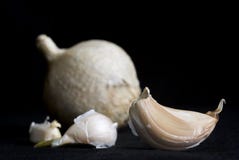


Garlic

Garlic has been used in defense against vampirism, as they notoriously despise this herb and repel against it.  Consequently, garlic was placed into a deceased person's mouth to prevent a vampire from feeding upon the victim.


Graveyard

A vampire will not be able to use his power on consecrated grounds such as a church yard or a cemetery.  You will be safe to retreat to these places.


Hammer

Some hammers were fashioned with a crucifix styled into the head. Its size was approximately six to seven inches long, and was what is used to drive a stake into the body of the vampire.


Holy Water

This was used to sprinkle on the vampire for both protection of the hunter, the surrounding area in which they occupied, or used directly on the vampire to harm it.
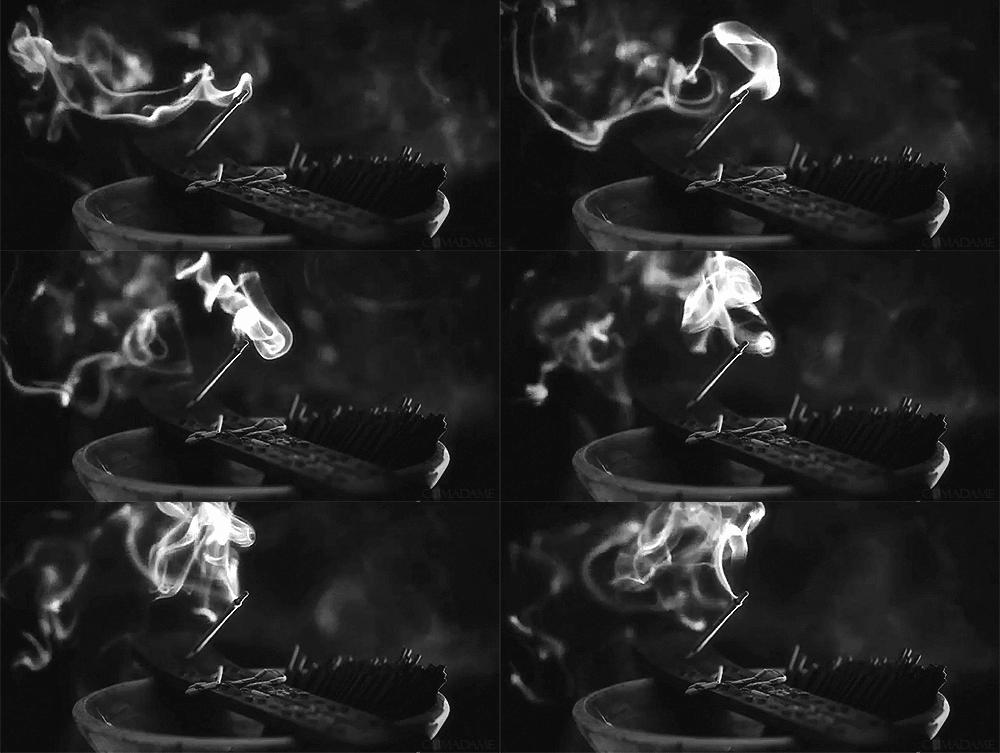


Incense

The pungent odor arising from this may have been used ceremoniously, whether it be used for protection or to ward off the evil spirit which lay in the vampire’s body.


Knives and Daggers

Some were used for throwing while others were specifically used for close combat.


Lemon

In Saxon regions of Germany, a lemon was placed in the mouth of suspected vampires.
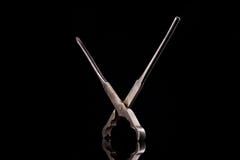


Metal Teeth Pliers

Nothing more than a common tool, these were used to remove the long teeth or fangs of vampires.  


Mirrors

Mirrors are used to ward off vampires when placed facing outwards, on a door.  You can also verify if the individual is indeed a vampire, as they do not have a reflection, or they may not cast a shadow which helps to substantiate their lack of having a soul.    


Mustard Seed

Sprinkled over the roof of one's home will protect you against these intruders.


Oils and Ointments

Commonly used as repellents, any consecrated oil or ointment can be used to place directly on oneself or an object


Prayer Book or Bible

Holy verses, quotes or readings may be used for performing exorcisms.


Pistols

Everyone knows that bullets do NOT kill vampires.  Bullets - exclusively silver bullets - are used to kill werewolves, never vampires.
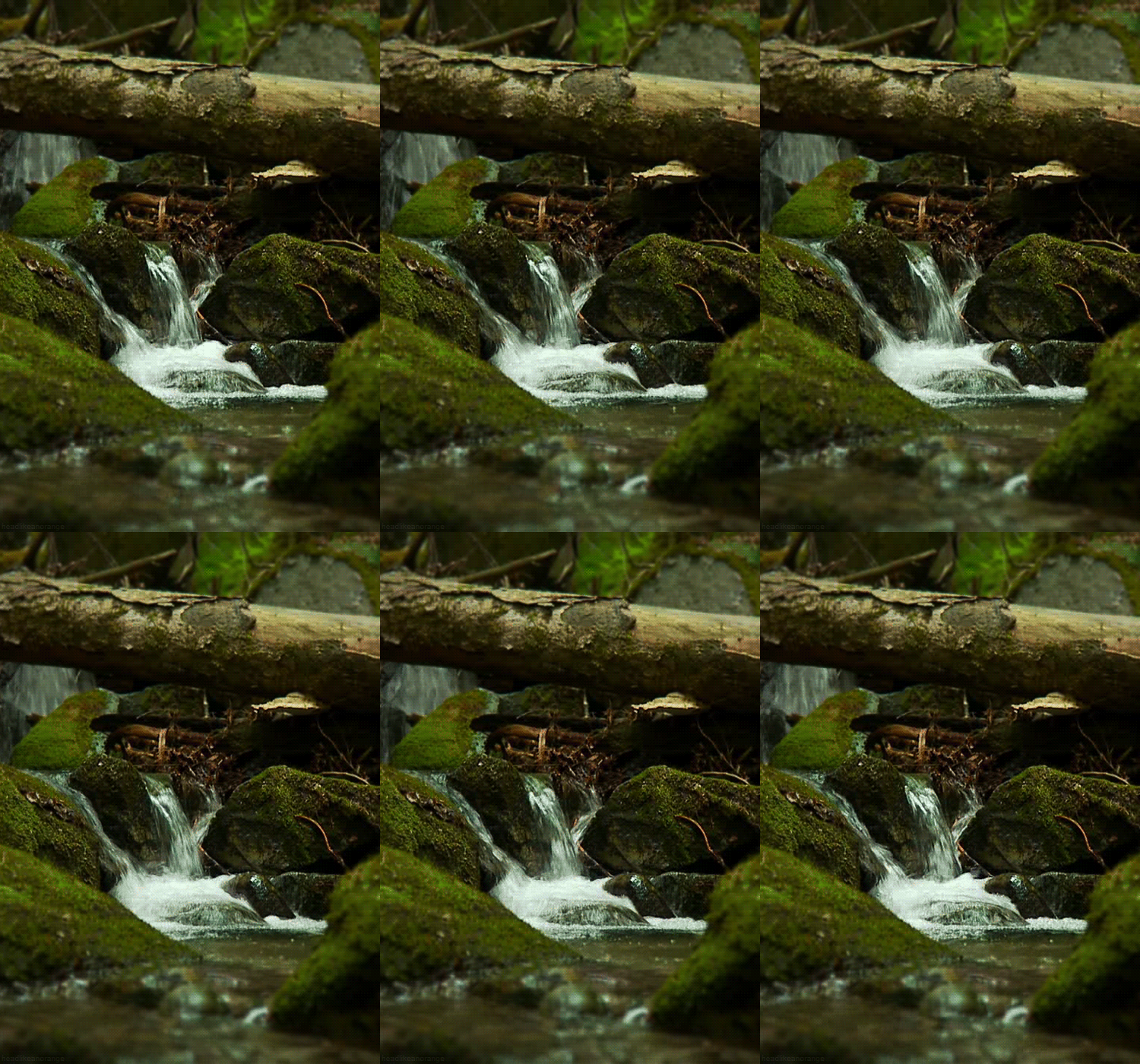


Running Water

Such as a brook or stream - vampires will not cross either.  I would caution you, however, to not rely on this as a means of defense, as a vampire can not only change forms, such as transforming into a bat or wolf, I would suggest that there is no reason why he would not leap over running water, if his thirst was great; or perhaps, his anger, high.


Stakes

Stakes were driven into the hearts of the vampires by use of the hammer.  A suspected vampire's grave could be unearthed and a stake would be driven through the corpse, to pin it to the ground. Holy water, Eucharists, and/or oils or ointments could be administered directly onto its body to prevent it from reanimating and could be either driven through the mouth, the heart or the stomach depending upon from what region the superstition came.  Popular choices of wood to make stakes were Ash, Hawthorne or Oak.



Sunlight

One of the most vulnerable aspects of a vampire is to expose them to sunlight, which may disintegrate them, instantly.  This is why they are only active at night.


Here is my shadow... from the streets of Chicago...


...and, here I am, also in Chicago, - and my reflection is real.  Whew!  Glad we got that nasty piece of business out of the way!

Sunday, February 14, 2016

Love Potion Notions


HaPpY vAlEnTiNeS dAy!

Depending on what you believe, and it is up to the reader, respectfully, that many consider the account of Adam and Eve as the world's first love story.  It was established in the earthly paradise of the Garden of Eden, where the first man, Adam, was made in God's image.  God, then created many animals, but none that satisfied his yearning for companionship like one of another human being.  God, knowing this, created woman whom He called Eve, from Adam's rib.  Their story is a moral warning about temptation and its consequences.  We remember that the serpent, (Satan) represents evil, convinces Eve (representing good) that it would be a good idea to eat the apple.   Since this tale has been told, the apple has been the symbol of fertility, youth and beauty, but with these underlying connotations, it may also be regarded as evil, as it suggests lust, temptation and sexual desire. 


All of us yearn to discover the meaning of love, and how it applies to our own passion and appetites.  Naturally, we want to sip the bubbling ambrosia,  taste the magical elixir or bite the forbidden apple, which will remedy our longing, and transcend us soaring into the arms of our respective beloved, where we may finally devour it's delights.  


Painting by Francois Boucher
The measures that both man and women have taken to arouse the libido, or to cast a spell, or even poison another, have been known for eons.  Aphrodisiacs, (a term derived from none other than the Goddess of Love, Aphrodite) are specific foods or drinks that are believed to increase our sexual appetite, to inspire lust, but not to cure infertility or impotence.  


Blowing the proverbial dust from ancient texts will introduce you to a plethora of witch doctors, alchemists, healers, wise women (and men), soothsayers and spiritual leaders who have in someway created "potions", "cures" or "charms" for erotic attraction and seduction - - all in the name of love. We are familiar with many stories by which bubbling brews were commonly prepared by magical means or sorcery.  


Image source: Pinterest
Throughout history, potions and concoctions prepared from herbs and plants have been contrived to capture the hearts or affection of another, or, to maintain youth and beauty.  They have been produced by the creation of written spells, the formulation of potions (and counter-potions), by the use of dolls, charms or amulets and by way of rituals. 


An example of a commonly used herb during the Middle Ages, Mandrake Root was eaten as an aphrodisiac and praised as a magical plant that could cure almost anything.  In fact, it was used to attract the opposite sex, to enhanced luck, touted as having the ability to ward off evil and even to become invincible during war.  The root, resembles in some way, the human body; thus, depending on the visual anatomy of the root, concoctions could be developed to be used for any male or female malady.  
The Love Potion, by Evelyn De Morgan (1855–1919)
Let us venture into the many ways our ancestors, literature and cinema have manufactured potions (or other magical food or drinks) to tell a story or offer advise.  "Happily Ever After" isn't always the case, as many tales involve tragic endings or heart break. 

FAIRY TALES


Disney
As children, we read about the old witch (who is really a disguised queen) poisons the beautiful Snow White by giving her a poison apple to eat.  The Queen does this for her own gain - so that she will be the most beautiful woman in the land - and, Snow White then falls into a deep sleep. I can only speculate that the writer's basis for the poison that was applied to the pome, was most likely hemlock or strychnine, which may cause paralysis - or more likely - death.   The unlikely cure, of course, was a kiss from a charmed prince.


Sleeping Beauty, by John Maler Collier
A magical sleeping poison is employed upon a needle of a spinning wheel, and was used to induce sleep in the tale of "Sleeping Beauty".


Illustration by Henry Warren
In the Danish fairy tale "The Little Mermaid", a sea witch gives Ariel a magic potion so that she may grow legs, but takes away her voice.
 
Illustration by Elizabeth Sherry

In "Jack and the Beanstalk", Jack's mother unknowingly throws magic beans out of her kitchen window, and overnight, it grows into an enormous stalk.  This allows Jack to climb to the top and confront an evil giant who has stolen his family's money.


Magical fairy dust is used by Tinkerbell to allow Peter Pan and kin to fly.  


Lewis Carroll, shows us Alice in Wonderland, upon falling down a rabbit hole, she partakes in various potions and with a psychedelic notion, eats mushrooms, to make her shrink or grow.   

LITERATURE


Tristan and Iseult by Edmund Blair Leighton (1853–1922)
In literature and inspired by Celtic legend, perhaps the most famous story about the use of a love potion, belongs to Tristan and Isolde.  This is a deeply romantic view about Isolde who is to be married to King Mark.  The young Cornish Knight, Tristan ventures to Ireland to ask the hand of the princess Isolde on behalf of his uncle, King Mark of Cornwall.  Tristan, having slain a dragon that was a devastation to the people, returns to Ireland.  On the journey home, Isolde's mother had produced a magical potion for Isolde to share with Mark, though accidental, Tristan and Isolde drink the brew together and fall madly - albeit, adulterous - in love. This eventually leads to their tragic demise.


Romeo and Juliet, by Julius Kronberg
Romeo and Juliet is based on external conflict and portrays the long-standing quarrel between the two established families in Verona, the Capulets and the Montagues. Romeo and Juliet are the main characters of Shakespeare's play.  There is an ongoing quarrel "between the Capulets and the Montagues, which prevent Romeo and Juliet from being able to profess their love openly.  The climax occurs when Romeo kills himself by drinking poison, preventing the young couple from experiencing happiness on earth. Some critics point to the death of Tybalt as the climax, for at that point Romeo’s life is already in danger from the Capulets, who will seek revenge.  Romeo and Juliet ends in tragedy. Because they cannot profess their love openly, fate intervenes and causes Romeo to kill himself, believing Juliet is dead. When Juliet discovers the death of her husband, she kills herself, wanting to be with her lover through eternity. Their deaths, however, bring to a final close the age-old quarrel between the Capulets and Montagues." -thebestnotes.com


google images
From MacBeth - Here, the three witches ("The Weird Sisters) concoct their "charmed cauldron" and imbue the brew with a magical incantation, their prophesy forms the future of MacBeth.  The fantastic ingredients used in this chant are humorous and frightening! 

"A dark Cave. In the middle, a Caldron boiling. Thunder.

Enter the three Witches.

1 WITCH.  Thrice the brinded cat hath mew'd. 

2 WITCH.  Thrice and once, the hedge-pig whin'd. 

3 WITCH.  Harpier cries:—'tis time! 'tis time! 

1 WITCH.  Round about the caldron go; 

In the poison'd entrails throw.— 
Toad, that under cold stone, 
Days and nights has thirty-one; 
Swelter'd venom sleeping got, 
Boil thou first i' the charmed pot! 

ALL.  Double, double toil and trouble; 
Fire burn, and caldron bubble. 

2 WITCH.  Fillet of a fenny snake, 
In the caldron boil and bake; 
Eye of newt, and toe of frog, 
Wool of bat, and tongue of dog, 
Adder's fork, and blind-worm's sting, 
Lizard's leg, and owlet's wing,— 
For a charm of powerful trouble, 
Like a hell-broth boil and bubble. 

ALL.  Double, double toil and trouble; 
Fire burn, and caldron bubble. 

3 WITCH.  Scale of dragon; tooth of wolf; 
Witches' mummy; maw and gulf 
Of the ravin'd salt-sea shark; 
Root of hemlock digg'd i the dark; 
Liver of blaspheming Jew; 
Gall of goat, and slips of yew 
Sliver'd in the moon's eclipse; 
Nose of Turk, and Tartar's lips; 
Finger of birth-strangled babe 
Ditch-deliver'd by a drab,— 
Make the gruel thick and slab: 
Add thereto a tiger's chaudron, 
For the ingrediants of our caldron. 

ALL.  Double, double toil and trouble; 
Fire burn, and caldron bubble. 

2 WITCH.  Cool it with a baboon's blood, 

Then the charm is firm and good."

Circe Offering the Cup to Odysseus (1891)
by John William Waterhouse
In Homer's "Odyssey"Circe is a Greek goddess or sorceresses of powerful magic, who lived alone in an old forest with her self-tamed wolves.  She was bewitchingly beautiful and her loveliness was capable in luring Odysseus [away from his quest] into her home in the forest.    She then incapacitates his men by virtue of magic, and turns them into pigs.  She was an expert in making potions from herbs.  She used her staff, to transform people (who disagreed with her) into animals.   


The White Witch of Narnia, by Justin Sweet
In The White Witch, Jadis, of C.S. Lewis’ "The Lion, the Witch, and the Wardrobe", eats the Fruit of Everlasting Life and gains immortality.


In Marion Zimmer Bradley's "The Mists of Avalon", we are somewhat amused (and yet feel a pang of sorrow) by the results that the protagonist and narrator, Morgan le Fay obtains when Guinevere requests that she concoct an amulet or birth charm that will make her fertile. Guinevere's seduction is so great she ends up making love in the Royal Bed Chamber with both King Arthur and Lancelot.  It is a very sensual scene, in the movie.   The book is told through a women's view, and the threads of both Paganism and Christianity are neatly woven throughout, as are other topics such as incest, magic, the lust for power, and forbidden desire.   

TELEVISION AND CINEMA


Samantha slips Darin a love potion in "Bewitched", as does Jeannie to Tony in "I Dream of Jeannie".


The Wicked Witch of the West, in The Wizard of Oz, devises a sleeping potion in which she covers in a field of poppies to capture Dorothy in her pursuit of the ruby slippers.


Photo source:  playbuzz
The Halliwell Sisters of the long running television series, "Charmed" utilizes potions and spells from their Book of Shadows, in their endless battle against evil.


And who can forget our cartoon friends, like Papa Smurf, who when he isn't solving the problems of the other Smurfs, is in his home making various elixirs and potions to ward off evil or other wise maintain the well being of their village.


Witch Hazel, in the cartoon series, "Bugs Bunny", realizes that Bugs is a rabbit and not small children she tried to lure into her home.  So, she tries to cook him instead.  She induces sleep by using a carrot filled with sleeping potion as a lure. Bugs eats the carrot and falls asleep. Witch Hazel then puts him into a pot to make rabbit stew.  While she is busy, a Prince Charming character enters the house and kisses Bugs' hand. Bugs wakes up and the Prince leaves. Bugs then attempts to escape down a hallway but is trapped by Hazel. As she nears, Bugs quickly finds a vase of her magic powder on a shelf with a label that reads, "in case of emergency" and throws it on her to transform her into a sexy female bunny.  The humor is that she has an alluring voice, but she maintains Hazel's nasty laugh.


Image source: momentumbooks.com.au
Harry Potter fans will delight in knowing there is a complete website dedicated to the different potions made famous in both the books, and movies.


"Death Becomes Her" is an all-star cast movie about two women who despise one another, yet come together in the search for eternal beauty.  They are seduced by another stunning woman who sells them a magic potion which will maintain their youth... A great comedy.


"Perfume" - a movie which is set in the 18th Century, involves the story of an olfactory genius, Jean-Baptiste Grenouille (Whishaw),  and his obsessive and homicidal quest for the perfect scent.

Here are a few more examples of movies whose theme involves the pursuit of love ....


ODD and ENDS

In ancient Rome and Greece, the use of bizarre ingredients used to feed the libido or other wise give you power include stuff like bats’ blood, which was believed that if you drank it, it would improve your night vision.


It was thought that by consuming certain "things" like beetles, bird or animal claws, feathers, tortoise shells, sea shells, rabbits feet, various animal skeletons or skins, you would be given the power of the animal from whence it came.  
Toads and frogs were fondly used in potions may have a scientific basis, as toads are known to secrete a chemical when they are scared.  The chemical was transferred into potions, which actually caused hallucinations. 


It is said that Cleopatra dissolved pearls in vinegar, and then drank the mixture, to enhance her powers of seduction. 


Cleopatra by Dani Luchuk
As time bore on, most animal parts were replaced by plants and herbs, many of which are still sought in today's world for their remedial qualities or for their pleasant affects or scents.


Everyone knows that oysters are a favored aphrodisiac, and it is said that oysters may have come into popularity as an aphrodisiac by their resemblance to female genitalia. 


Chocolate (in the form of a drink) was devoured by the Aztec ruler, Montezuma, prior to a visit to his harem.  He believed that his sexual capabilities would increase.


Richard Allen Miller states: “An old love charm recommends cutting marigold flowers, sprigs of marjoram, thyme, and a little wormwood on St. Luke’s Day. Dry them before a fire and rub into a powder. Simmer over a slow fire in a small quantity of unprocessed honey and vinegar. Anoint yourself with this mixture when going to bed, saying the following: ‘St. Luke, St. Luke, be kind to me, in dreams let me my truelove see.’ ”


What ever you eat or drink on this Valentine's Day, above all else, may your day be filled with ♥ love  ....