{ font: $(body.font); color: $(body.text.color); background: $(body.background); padding: opx; $(body.background.override) } expr:class='"loading" + data:blog.mobileClass'>
Showing posts with label Scandal. Show all posts

Sunday, February 2, 2014

Pink Margarine


What 
do 
you 
think 
of 
when 
you 
hear 
the 
word 
"PINK"?


Is is something sexy like Victoria Secret underwear?


The Pink Panther?

Breast Cancer Awareness?


Valentines Day and Sweet Love?


Does pink oleo margarine come to mind?  Well, um... no!  


Margarine, also known as oleo, or oleomargarine was invented by a French chemist named Hippolyte Mège-Mouriès, in 1869. It was made from beef fat, intended to be cheaper and less perishable than butter. 
Thanks for nothing, Mège
Later, during the time of World War I, vegetable oils like cottonseed and soybean oils replaced animal fats and oleo was mostly made from vegetable oils.


As our country entered into "The Great War" (WWII), the production of oleo became appealing as the price was considerably lower than butter and a longer, less perishable shelf life.  It was basically an affordable substitute for real butter.  
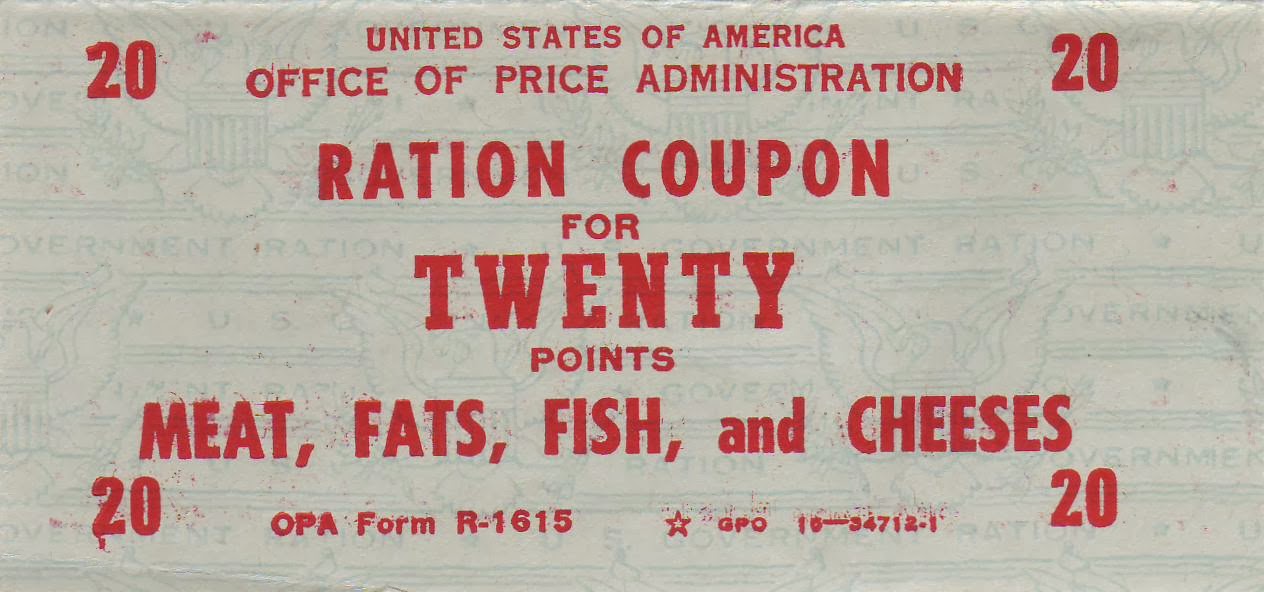


During this time, certain food shortages, and rationing was common.  Foods such as sugar, meat, coffee, processed foods, canned foods, cheese, milk and fats (such as butter, lard, etc.) were the most rationed items.


"The creation of margarine led to a war between the dairy industry and the margarine producers. The dairy industry naturally resented the competition of the artificial butter substitute and did everything in its power to convince legislators to ban the production of margarine." 


One should note that at the time that oleo was introduced into the American diet, it's original color was a sickly greyish color (not very appealing to the consumer, to be sure).  Michigan, Maine, Pennsylvania, New York, Wisconsin and Ohio created laws to ban the sale of a dyed yellow product.  


Who could blame them for wanting to keep their dairy farms profitable? Part of their livelihood was the production of real butter and the sale of oleo threatened their income. 


No thank you.
Laws were created in Vermont, New Hampshire and South Dakota which required the manufacturers of margarine to be dyed pink, as not to confuse the consumer between the choice of real butter verses oleo margarine.  Pink?   A-Yup, that's a fact.


Equally disturbing, as I already said, some states prohibited the sale of yellow margarine, so clever manufacturers got around these laws by actually selling it in it's present, un-dyed state (grey or sickly white) and added either packets or "beads" of yellow dye, so one could mix it themselves.  


After World War II, and into the later part of the 20th century, saturated fats have become more and more of a controversy as we become more educated and informed about the possible harmful consumption of foods such as lard or butter.  We have grown more health conscience - or have we?

Chew on this:

Typical ingredients of margarine:


Let's Compare: 


Thanks....

but....

I choose butter.


Tuesday, January 21, 2014

Lover's Eyes


These incredibly detailed portrait miniatures, which show only they eye of the "sitter" (the person who would give the portrait to a secret lover, perhaps) were intensely popular for a very brief time from around 1790 to 1830.  Lover's Eyes were often created as a token for unsanctioned love, considered very intimate and yet quite mysterious, were delicately rendered on ivory or copper.  They were statements of wealth, as you can see, set in various jewels symbolizing marriage, death, infidelity, remembrance, devotion or a secret promise. 

Most of the miniature portraits that survive today are unknown, adding more mystery for the collector.  The "feverish mania" for these objects were stopped being produced as quickly as they came into fashion, but what is left is how the Lover's Eyes began its popularity in the first place.  salon.com explains the portrait's scandalous origin and popularity:

"According to lore, the story of lover’s eyes goes back to the end of the 18th century, when the prince of Wales — who later became George IV — became smitten with a twice-widowed Catholic woman named Maria Fitzherbert. He courted Maria Fitzherbert rather unsuccessfully at first; he kept trying to win her affection and profess his undying love to her, and she wasn't really going to have any of that. Finally, he staged a kind of half-hearted suicide attempt (I think it was more of a cry for help than an earnest effort to take his own life) — and then she reluctantly agreed to marry him. 

But shortly thereafter — I think really the next day — she came to her senses and realized what exactly she had done by consenting to marry the prince of Wales, which of course was totally illegal according to the laws (first of all, the king had to consent to the marriage of the heir to the throne, and second, he would never have consented for the prince to marry a Catholic, let alone a twice-widowed Catholic six years his senior).

So Fitzherbert fled to the Continent, trying to escape George’s attention, but he didn’t give up. On Nov. 3, 1785, the prince wrote to Mrs. Fitzherbert with a second proposal of marriage. Instead of sending an engagement ring, as we might expect today, he sent her a picture of his own eye, set in a locket, painted by the miniaturist Richard Cosway, one of the celebrated artists of the day. At the time, they referred to these pieces as “eye miniatures”; today we call them “lover’s eyes,” but that wasn’t a period term — that’s a term coined by the New York-based jeweler Edith Weber, who’s handled a lot of these over the years.

Anyway, George sent a note with this eye miniature, and it said: “P.S. I send you a parcel, and I send you at the same time an eye. If you have not totally forgotten the whole countenance, I think the likeness will strike you.” It’s not known whether it was the letter or the eye that changed Mrs. Fitzherbert’s feelings precisely, but shortly after that, she returned to England and married the prince in a secret ceremony on Dec. 15, 1785. Soon, the fad for these eye miniatures began to catch on — so this episode is, according to legend, the genesis of the eye miniature.

There is some evidence to suggest that these had appeared in France a few years earlier, and that the Brits were only adopting a French invention; I think the jury’s still out. In any event, the love affair between the prince of Wales and Maria Fitzherbert popularized these objects and spawned a fad that lasted well into the 1830s — and even later, past Queen Victoria, who was known to have commissioned a number of these objects during her reign. There are even artists to this very day who are painting lover’s eyes. One is the great-great-grandson of the famous Philadelphia portraitist Thomas Sully; he’s sent me a picture of a miniature he’s working on. Rather than paint on elephant ivory, which of course wouldn't be legal nowadays, he paints on mastodon ivory. He also points out that he usually has them commissioned by faithful spouses, not lovers or mistresses."