{ font: $(body.font); color: $(body.text.color); background: $(body.background); padding: opx; $(body.background.override) } expr:class='"loading" + data:blog.mobileClass'>
Showing posts with label Vermont Ghost. Show all posts

Friday, October 18, 2013

A HAUNTING WE WILL GO... CUTTINGSVILLE, VERMONT


THE HISTORY:
John Porter Bowman was born in 1816.  When he was just 15 years old, he began working in a leather tannery in Rutland, Vermont.  After working in Rutland for about 5 years, he sought similar employment in New York State, apparently to master the trade.  He returned to Vermont in Shrewsbury to set up his  own tannery business and later, was involved with local politics as a Shrewsbury Townsman, and then being elected to the State Legislature in 1851.  


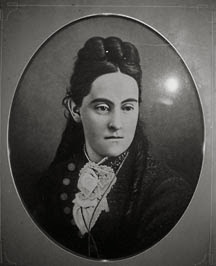
In 1849 that he married the dignified Jennie E. Gates from Warren, New York.  The couple lived in Stony Creek, New York.  Mrs. Bowman is remembered for her good manners and generosity, as well as being a good wife and mother. 

THE TRAGEDY:

 She gave birth to their first daughter, Addie L. in 1854.  Sadly, Addie lived only 4 months. A second daughter, Ella, was born in 1860, and after succumbing to illness, she died at the young age of 22 years.  


Mausoleum Statue of little Addie Bowman
Ella Bowman


It is often said that misfortune "comes in threes", with this being true for John Bowman.  In less than a year after losing young Ella, his beloved wife passed way.  Grief-stricken, he had a mausoleum erected as a final resting place for his family in the "native hills" of  Cuttingsville, Vermont.  The monument was christend "Laurel Glen Mausoleum". 


The Shrewsbury Historical Society writes:


"A plot of land in Cuttingsville adjoining the old burying ground was chosen for the shrine. For over a year, 125 skilled sculptors, granite and marble cutters, masons and laborers were employed in erecting this classic example of Grecian architecture, designed and planned by New York architect and special designer, G. B. Croff hired by Bowman."


"A life size statue of Mr. Bowman is posed outside. Bent with grief, and burdened with mourning cloak, silk hat, gloves, a huge funeral wreath, and a key, he is represented in the act of ascending the steps of the tomb." 


"In his book describing the mausoleum, G. B. Croff expressed his thoughts in the following words: "A most pathetic family history wrought in stone, Laurel Glen Mausoleum will stand for centuries . . . and prove a laurel wreath, a crown of glory to perpetuate the well-rounded, honorable, successful life and name of its most noble founder."


"In 1881, the three caskets were placed in the mausoleum. Bowman had the grounds graded, added retaining walls, arranged grass plots, had walks and drives filled with crushed purple slate and set out trees.


 A greenhouse and conservatory was erected on the grounds where the many plants were propagated and used to decorate the cemetery grounds. Laurel Glen Cemetery was beautifully kept and park-like, it attracted people from the city who enjoyed the trip by horse and buggy to picnic on the grounds."


"Across the road, Bowman had G. B. Croff design and build a magnificent Victorian summer residence, and called it Laurel Hall.


 In the May 20, 1882 edition of the Rutland Daily Herald, it stated that "the grounds of Laurel Hall were treated as an extensive parterre or miniature landscape, with winding walks and drives, swelling terraces and shrubbery of various sorts, and graced with one large allegorical Grecian fountain, in composition, a water nymph mid sweet accessories, with laughing sprays of water singing amid the trees and flowers their songs of parting salutation to their homes high in the mountain side, and lulling one to sleep and pleasant dreams, in hammock swung beneath the shadows of the spacious covered gallery nearby."

HAUNTED MANSION:
"When completed in 1881, the mausoleum became a local tourist attraction. Thousands converged on the cemetery to gawk at this unusual crypt. With all of the attention it received  Bowman had a guest book placed inside the chamber, and hired a guide to conduct short tours.
"Bowman himself died in 1891, and fittingly joined the rest of the family in this unique sanctuary."


"Perhaps the most perplexing part of this story would be the unusual will that Mr. Bowman had left behind. Allegedly, his will stated that his fortunes would go towards the maintenance and upkeep of the house, but more strangely, he wanted his caretakers and servants to act like he would be coming home each evening. So in addition to mowing the lawn and tending to the gardens, servants would change the bedding each night as if he would want to come home to a fresh bed to sleep in. Fires would be lit, and the cooks would prepare an elaborate meal which would be presented in the dining room – just in case he showed up unannounced one night and wanted a warm supper...."


"Strange and eerie occurrences have been reported around the mausoleum at night. The mansion across the street from the cemetery seems to be the focal point for hauntings. Locals believe that the ghosts of Bowman and his family still walk within the mansion they had once enjoyed during life. The mansion, vacant for years, was eventually purchased by new owners. The lucky (or unlucky) new homeowners have reported seeing ghosts of the Bowman family gliding through the rooms of the old mansion. In fact it is said to be so haunted that the owners will no longer stay at the house after dark."

"Other tales of weird noises and strange lights have been reported to manifest themselves within his grand house across the street, the most common told tale is the sounds of a phantom baby crying. The odd footnote to this is no children had ever lived inside the house, making this phenomenon a mystery."  -the vermonter.com


MANIFESTATIONS:

1) An apparition of an unknown woman, perhaps Mrs. Bowman, has been seen throughout the mansion, going about her business. Perhaps she died before she could complete a long list of chores to do, and she can't let go of this world because she died before she was ready.

2) Visitors who stand at the top of the staircase on a darkened stain, experience uneasy feelings of "forbodence and dread." Perhaps this stain is connected to the family deaths.


While visiting the mansion, one must mind his or her manners, as misbehavior will sometimes be dealt with. A young visitor who was taking a tour of the mansion with her family, stuck her tongue out at a picture, which then came off the wall and hit her, in full view of several people. Children need to be corrected and if parents won't do it, an unseen presence in this house, perhaps Mrs. Bowman will gladly step in and provide this parental service! -Need cite


When visiting the Laurel Hall (Bowman's Estate) an apparition of an unknown woman has been seen throughout the mansion, going about her business. Visitors of the mansion state if they stand at the top of the stairs on a dark stained spot , an uncomfortable and uneasy feeling comes upon them.It has been mentioned that the dark stain maybe connected to the deaths of the members of the Bowman family.

Other guests visiting the mansion have experienced a spirit that appreciates manners. The story goes as follows a young female child was visiting the mansion taking a tour with her family, The little girl stuck out her tongue at a picture on display. Witnesses state that the picture then came off the wall and hit her. The current owners turned the estate into a museum. They have said that no one should stay over night at this home so that the spirits can go on with there business. - Flicker

Tuesday, October 8, 2013

Saluting Sylvia

CAREER:  Poet and writer. Worked as a volunteer art teacher at the People's Institute, Northampton, MA, while in college; served as guest editor with Mademoiselle, summer, 1953; taught English at Smith College, 1957-58; lived in Boston, 1958-59, and Yaddo, 1959; settled in London, England, 1959, then in Devon, England.    
   
Sylvia Plath

"
ylvia Plath was one of the most dynamic and admired poets of the twentieth century. By the time she took her life at the age of thirty, Plath already had a following in the literary community. In the ensuing years her work attracted the attention of a multitude of readers, who saw in her singular verse an attempt to catalogue despair, violent emotion, and obsession with death."


Born in 1932 in Boston, Plath was the daughter of a German immigrant college professor, Otto Plath, and one of his students, Aurelia Schober. The poet's early years were spent near the seashore, but her life changed abruptly when her father died in 1940. Some of her most vivid poems, including the well-known "Daddy," concern her troubled relationship with her authoritarian father and her feelings of betrayal when he died.


Financial circumstances forced the Plath family to move to Wellesley, Massachusetts, where Aurelia Plath taught advanced secretarial studies at Boston University. Sylvia Plath was a gifted student who had won numerous awards and had published stories and poetry in national magazines while still in her teens. She attended Smith College on scholarship and continued to excel, winning a Mademoiselle fiction contest one year and garnering a prestigious guest editorship of the magazine the following summer.


It was during her undergraduate years that Plath began to suffer the symptoms of severe depression that would ultimately lead to her death. In one of her journal entries, dated June 20, 1958, she wrote: "It is as if my life were magically run by two electric currents: joyous positive and despairing negative—whichever is running at the moment dominates my life, floods it." This is an eloquent description of bipolar disorder, also known as manic depression, a very serious illness for which no genuinely effective medications were available during Plath's lifetime. In August of 1953, at the age of nineteen, Plath attempted suicide by swallowing sleeping pills. She survived the attempt and was hospitalized, receiving treatment with electro-shock therapy. Her experiences of breakdown and recovery were later turned into fiction for her only published novel, The Bell Jar.


Having made a recovery, Plath returned to Smith for her degree. She earned a Fulbright grant to study at Cambridge University in England, and it was there that she met poet Ted Hughes. The two were married in 1956. Plath published two major works during her lifetime, The Bell Jar and a poetry volume titled The Colossus. Both received warm reviews. However, the end of her marriage in 1962 left Plath with two young children to care for and, after an intense burst of creativity that produced the poems in Ariel, she committed suicide by inhaling gas from a kitchen oven.


The Bell Jar is narrated by nineteen-year-old Esther Greenwood. The three-part novel explores Esther's unsatisfactory experiences as a student editor in Manhattan, her subsequent return to her family home, where she suffers a breakdown and attempts suicide, and her recovery with the aid of an enlightened female doctor. One of the novel's themes, the search for a valid personal identity, is as old as fiction itself. The other, a rebellion against conventional female roles, was slightly ahead of its time. Nancy Duvall Hargrove observed in the Dictionary of Literary Biography, "As a novel of growing up, of initiation into adulthood, [The Bell Jar] is very solidly in the tradition of the Bildungsroman. Technically, The Bell Jar is skillfully written and contains many of the haunting images and symbols that dominate Plath's poetry." 


Materer commented that the book "is a finely plotted novel full of vivid characters and written in the astringent but engaging style one expects from a poet as frank and observant as Plath. The atmosphere of hospitals and sickness, of incidents of bleeding and electrocution, set against images of confinement and liberation, unify the novel's imagery." Hargrove maintained that the novel is "a striking work which has contributed to [Plath's] reputation as a significant figure in contemporary American literature. . . . It is more than a feminist document, for it presents the enduring human concerns of the search for identity, the pain of disillusionment, and the refusal to accept defeat."

Source:  The Poetry Foundation


Plath: Probably her most published photograph, taken 1957


Sunday, October 6, 2013

Do You See What I See?

Is Someone Here?

This is an abandoned farm house that suffered a fire located at 3191 Route 14, in Brookfield, Vermont.  I took pictures through-out the house, and ended up with several weird images - but, one,  in particular - was unexplained, and quite interesting. 

It is untouched, digital picture which appears to be angelic-like cluster of light, looking down into the basement.  There is no electricity going into the house, so what you see, is not a light bulb. This house, which includes 12 - 15 "tillable" acres is currently for sale at $110,000.

Front porch
Door with abandoned debris
Driveway
Burned and vandalized
Perhaps the old living room
Another living room view
Another life
Unsafe to enter
Looking into basement - Do you see what I see?  
Another view of burned living space
Exterior


Friday, October 4, 2013

Frozen with Fear

~ A PERSONAL EXPERIENCE
AND TRUE STORY ~

One summer, around the time when I was about 12 or 13 years old, I twice was asked to babysit for a friend [who was the "regular" babysitter] who had made another obligation.  Of course, I agreed and made arrangements with the parents.

The house was located on Bentley Avenue in Poultney.  My first gig went fine, although I recall feeling cold and uncomfortable in the house and after putting the two girls to bed, I believe I fell asleep on the couch until I heard the people for whom I was sitting come home.


The second time, was about 2 weeks later.  Outdoors, it was very hot and humid.  I remember using the downstairs bathroom and had this horrible feeling of a dark presence that felt like it surrounded me, and the house was cold.  Strangely cold.

I ran to the living room couch where I remained for hours, curled in a ball in the corner of the living room, not daring to move.  I felt an indescribable terror, which basically rendered me frozen with fear.  When the parents came home, I couldn't leave fast enough and ran to my house, opting to take the sidewalks, and not run up the railroad tracks, which would have been a creepier route.


When I arrived home, I told my parents about my experience, and my Dad, in particular believed what I said.

In 1979, our family moved to another town.  A couple years after moving, my father was reading the newspaper and called my name, saying to me, "Hey, do you remember babysitting in the house on Bentley Avenue, and the weird feeling that you had?"  ...."Well, who ever is renting it now, discovered the bones of a girl between the ages of 14 to 17 buried in the basement, and apparently she had been murdered."


Dad handed me the article, and basically the house was being rented by some college students who had discovered the body in the basement, and forensics were called in to examine the bones.  It appeared that the girl had suffered trauma to the head, and it appeared there was some violent wound to her femur.  That is all I remember from the story and cannot locate the story online, and, unfortunately, the Rutland Herald archives only go back to 1999.


All I can say, is that something was in that house - it was dark and malevolent - and the feeling of terror that I experienced never left me.  The only other time I felt this was at the "Thrall Farm" in Poultney - also in the basement - where a ping pong table was set up.  I went into the basement for just a moment and had a similar feeling - I fled in terror and never again returned to the cellar of that home, and I was there very often during my youth.


By Denise Hinckley, October 4, 2013 - Please request permission to publish - All rights reserved.

Saturday, September 21, 2013

"Big Ed" is still there ~ Its all Good

~ Submitted by Kathy Mahar-Stephenson, September 19, 2013
 & Printed with permission by author ~

On Labor Day weekend, in 1981, Kathy writes, "My father-in-law, Edward Hawthorne, and our neighbor, George Bassler Sr., were murdered in our front yard. It's a long and tedious story, but suffice it to say that the murder was premeditated by a man who hated my neighbor. My father-in-law was in the wrong place at the wrong time...And we have lived with the horror of that night for 32 years."

Grave stone of George Bassler: 1931 - 1981, East Wells, Vermont

"You may remember that in September of 1981, my father-in-law and next door neighbor were murdered on my property in Wells where we were building a home. A few years later, my now ex-husband was working overnight out of town. I was alone in the house with two small children. The house is quite a ways out in the country. I had put the girls down for the night and was enjoying a good book on the sofa, sitting so that I could see their bedroom doorways from the living room. A motion in the hall way caught my eye. I looked and saw my father-in-law standing there, smiling at me. He was dressed as he always was, plaid shirt and green Dickie work pants. He nodded and proceeded to go into my youngest daughter's room. A wave of peace and calm came over me and I knew then and there that, no matter how much I hated being alone in that house at night, my children and I would always be safe. We had put the property up for sale immediately after the killings, but it took 6 years to sell. Current owners are friends of mine and they often see and hear things that they can not explain. I have told them that "Big Ed' is still there. It's all good."


Thursday, September 19, 2013

Collecting Your Stories ???

I would love to hear from you! 

Have you ever experienced a spine tingling moment - or do you have a ghost story - or a spooky event that you wish to share with me? 

You can remain anonymous or not - please specify!

I would love to post personal experiences from any reader, particularly if the story involves Vermont or New England. 

Email me at vermontdeadline@gmail.com 

or contact me on Facebook at 

https://www.facebook.com/vermont.deadline 

Thank you, and hope to hear from you soon! 

~Denise

Thursday, September 12, 2013

Vermont's Carthusian Monastery

Charterhouse of Transfiguration, near Arlington, Vermont
Did you know that Vermont is home to the only Carthusian Monastery (called a "Charterhouse") in the United States, in fact, in North America. It is nestled in a high mountain valley near Mount Equinox in Southern Vermont, U.S.A. 

The monastery is not open to visitors.


St. Bruno of Cologne
Founded by St. Bruno of Cologne in 1084, the Carthusians are unique among the religious orders of the Catholic Church. Without a doubt, they are the strictest of the monastic communities. They live as hermits in a community where almost complete silence is observed. Anonymity is also a hallmark of their lives. For example, any book they write lists the author as “A Carthusian.” (Their gravestones bear the same title.) There are only twenty-five Carthusian monasteries (known as Charterhouses) in the world.


Vermont is home to the only Charterhouse in the Western Hemisphere. Its founding was the work of a remarkable man named Thomas Verner Moore (1877-1969). Born in Kentucky, Moore joined the Paulists at nineteen and was ordained in 1901. He later obtained a medical degree from Johns Hopkins and practiced psychiatry. In 1923, feeling a call to the contemplative life, Moore joined the Benedictines and started a monastery in Washington, D.C. A psychology professor at Catholic University, he authored twenty books on the subject.


At age seventy, Moore felt a call to live the contemplative life yet more deeply. In 1947, he joined the Carthusians in Spain. In 1950, his religious superior suggested that he was called to found the first American Charterhouse. The following year he returned to America, where friends arranged the purchase of a 550-acre farm in Vermont. In 1951, a general chapter of the Carthusian order approved the new monastery’s foundation. It was named the Charterhouse of the Transfiguration.


Father Moore left Vermont in 1960 and returned to the Charterhouse in Spain, where he died at age 92 in 1969. The following year, the American Charterhouse moved to a larger and more secluded site at Mount Equinox, Vermont, where it remains to this day. (There are still no Carthusian nuns in the Western Hemisphere.)

 
Source:  http://www.patheos.com/blogs/mcnamarasblog/2010/11/a-life-apart-the-carthusians-of-vermont.html