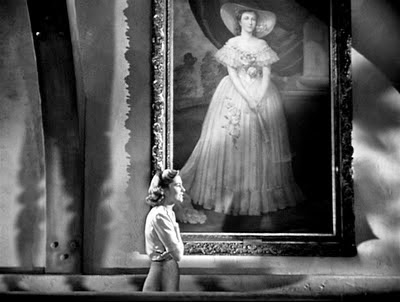
The Moral of the Story, before the story:
The origin of the following story remains a bit controversial, as it was first credited as written by William Lorenzo Carter, a blind poet from Benson, Vermont, sometime around 1834. Though blind, Carter was a traveling minstrel and sang "Young Charlotte" as a ballad where ever he roamed. The song was wildly popular during that time. Later, sometime around 1937, Phillips Barry discovered the poem had been published in 1834 in a Maine newspaper entitled "A Corpse Going to a Ball", (see below for the poem) written by Seba Smith. Folklorists still remain confused about it's actual origin.
Please note: I have re-written the story from it's original text.
To learn about "Frozen Charlotte" dolls - please scroll the bottom of this post.
 c. 1834:
This is the story of Fair Charlotte. Daughter of a very wealthy business man, who doted on this beautiful young lady when ever possible, as he could afford to do so. He bought her the prettiest dresses and loveliest jewels in the land, and she wanted it all.
 Charlotte was indeed a beauty, who vainly knew it. Never could she pass a mirror without longingly admiring her own image. A narcissistic, self-centered beauty, she was. She wore her golden hair in cascading curls, which framed her milky skin. Her lips were ripened cherries, with eyes the color of the Caribbean Sea - oh, how they sparkled - against her blushing cheeks.
During this holiday season, Charlotte cast her web upon the town's most eligible bachelor - a striking lad named Charles; affectionately known as "Charlie" - and persuaded him to escort her to most sought after social event of the year, where a nearby prosperous farmer had planned a New Year's ball. All the while, she was obsessed with the thought of how all would envy her, as she made her grand entrance.

The evening came when Charlotte paraded down the grand staircase to meet her escort, wearing the most stunning gossamer pale blue gown, made of silk and satin and lace. She twinkled and glowed - positively radiated splendor - as she stepped into the light of the entry to greet Charles, who was standing with Charlotte's parents.
 Charles, dressed in a warm fashionable cape, with a scarf bundled around his neck, he removed his fur hat to receive the resplendent Charlotte.
And the story goes....
"Please, my daughter, wear my warm wool coat and scarf," pleaded Charlotte's mother. "you will catch your death out in this bitter cold."
"Oh, Heavens No! Mother, such an ugly coat will ruin my gown," returned Charlotte.
Charles and her parents begged Charlotte to be sensible and to wear a coat or take a blanket, she could not be convinced to cover her gown.

Hesitantly, Charles helped Charlotte into the open sleigh that would be pulled by two fast horses. The snow had begun to fall and the landscape was white with frost, against the light of the moon.
As they headed into night with naught but the sound of the metal sleigh runners crunching against the frozen ground, Charlie asked, "Charlotte, Charlotte, are you cold?"
" 'Tis very cold," she replied, shivering.
"There is a blanket that I can wrap around you, under the seat right here. It is a long, cold ride," said Charles.
"Do you want me to smell like a horse blanket when we reach the party? No!" snarled Charlotte.
 At this, Charles whipped the horses to hurry the horses, as he could see that Charlotte was very cold. Her lips now grew blue with frost that matched her gown, and her hair was sprinkled with snow.
"Charlotte, dear Charlotte, are you cold?" asked Charles again. "The bearskin on which you are seated will warm you."
 "What!" replied Charlotte her tone much gentler now, "And wrinkle this beautiful gown? I have anticipation to keep me warm."
A bit further they traveled, and Charles glanced at the maiden in the light of the ethereal moon. Her skin glowed with a surreal hue which made him shiver and she seemed to sweetly smile back at him.
"Charlotte, Charlotte! Are you cold?" he pleaded "Come. Sit closer to me, and I will share my cloak! My body will warm you."
"That would not be proper. Besides, I am warmer now."
Charles whipped the horses furiously to move as fast as they could, and in the distance he could see the soft glow of light from the farm's windows, and smoke from the chimney billowing softly into the sky. Closer still, he could make out the roaring fire glowing in the hearth, within.
 Charles reined in the horses as they drove through the wrought iron gates. He jumped from the sleigh, taking her cold hand, he cried, "Charlotte! Charlotte! We are here! Let us get inside and warm ourselves by the fire!"
But, Charlotte said not a word, nor did she stir, for her vanity was her demise.
"Frozen Charlotte" by Natalie Merchant
Blue like the winter snow in this full moon
Black like the silhouettes of the trees
Late blooming flowers lye frozen underneath the stars
I want you to remember me that way
Far away
I'll be gone
Will you wait for me here?
How long?
I don't know
But wait for me here
Still as the river grows in December
Silent and perfect blinding ice
Spring keeps her promises
No cold can keep her back
I want you to remember me that way
Far away
I'll be gone
Will you wait for me here?
How long?
I don't know
But wait for me here
Follow
Don't follow me to where I'll go
Far away
I'll be gone
Will you wait for me here?
How long?
I don't know
But wait for me here
Follow
Don't follow me to where I've gone
Someday you'll take my place
And I'll wait for you here

ON A PERSONAL NOTE: Interestingly enough, in Gloucester, MA, I lived at the end of an industrial plaza, known as "The Fort" (not to be confused with Stage Fort Park).
 The beach in front of the apartment building I lived in was the "Pavilion Beach", and people frequently (and some of us, daily) would populate the beach in search of sea-glass.
As we searched, we would occasionally discover small, very antiquated china doll parts. An arm, a hand, a partial head, a leg and so on. (I still have some!) We always wondered why they were washing up on the beach, and it was the only beach that they were found, to my knowledge. Now, after reading about the dolls, I can't help but wonder if there was a ship wreck whose cargo was Frozen Charlotte's or perhaps the dolls were used as ballast?

To forever immortalize this story, "Frozen Charlotte" is also a name used to describe a naked china doll that was manufactured, all in once piece, from approximately 1850 to around 1920. The name comes from the fore-mentioned folk ballad. Wiki describes the dolls as "pillar dolls, solid chinas or bathing babies" ranging in size from under an inch all the way up to or over 18 inches!

"The smallest dolls were sometimes used as charms in Christmas puddings. Smaller sizes were very popular for putting in doll's houses. Occasionally versions are seen with a glazed china front and an unglazed stoneware back. This enabled the doll to float on its back when placed in a bath.


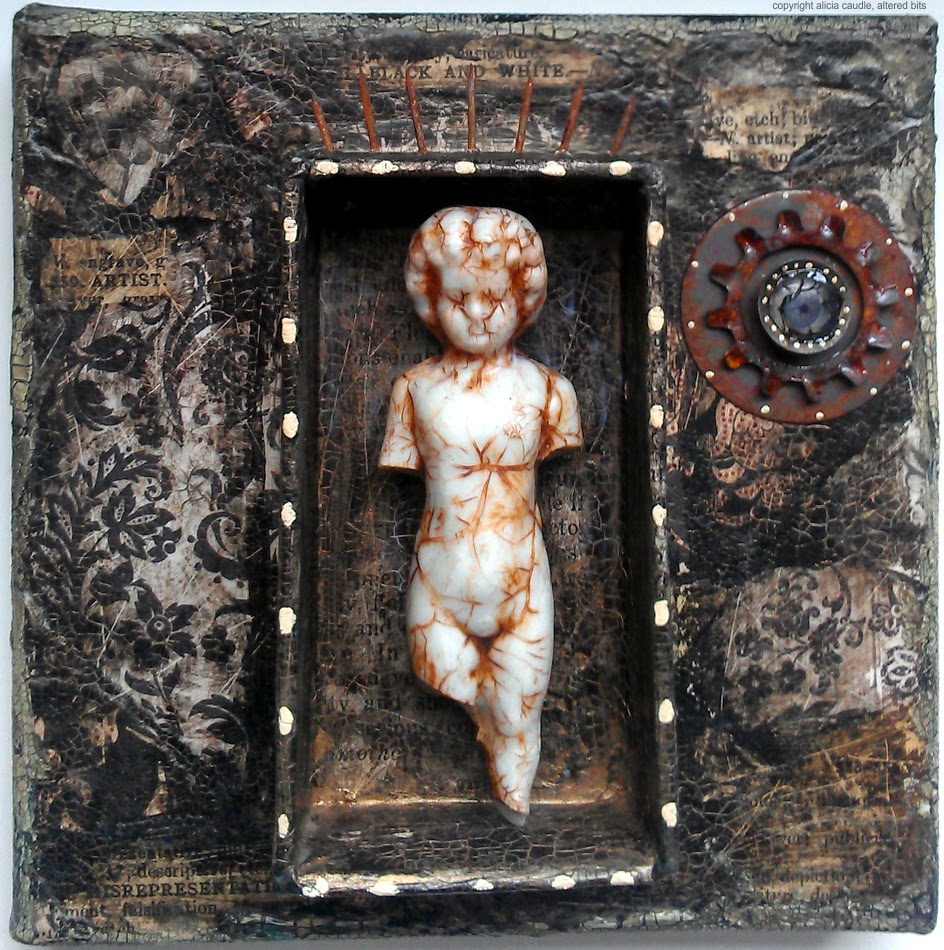

Frozen Charlotte dolls were popular during the late 19th and early 20th centuries in the United States. Smaller versions of the dolls were also known as penny dolls, because they were often sold for a cent. Most were made in Germany.

They are also made in bisque, and can come in white, pink-tinted, or, more rarely, painted black. Some rare examples have molded chemises. Male dolls (identified by their boyish hairstyles) are called Frozen Charlies." - wiki

“A Corpse Going to a Ball.”
1.
Young Charlotte lived by the mountainside,
In a lonely, dreary spot;
No other dwelling for three miles round,
Except her father’s cot.
And yet on many a winter’s eve,
Young swains would gather there,
For her father kept a social abode,
And she was very fair
2.
Her father liked to see her dressed,
Just like some city belle;
She was the only child he had,
He loved his daughter well.
Her hair was black as raven’s wings,
Her skin was lily fair,
And her teeth were like the pearls of white,
None with her could compare
3.
At a village just sixteen miles off,
There’s a merry ball tonight,
Although the air is freezing cold,
Her heart is warm and light.
And there she watched with an anxious look,
‘Til a well-known voice she heard,
And driving up to the cottage door,
Young Charles in his sleigh appeared.
4.
The mother to her daughter said,
“These blankets round you fold;
For it is a dreadful night, you know,
You’ll catch your death of cold.”
“Oh, no! Oh, no!” the darling cried,
She laughed like a gypsy queen,
“For to ride in blankets muffled up,
I never could be seen.”
5.
“My silken cloak, it’s quite enough –
You know it’s lined throughout.
Besides I have a silk mantle,
To tie my face about.”
The gloves and bonnet being on,
They jumped into the sleigh,
And away they did ride o’er the mountainside
And the hills so far away.
6.
There is music in the sounds of bells,
As over the hills they go;
What a creaking wake the runners make,
As they bite the frozen snow.
And away they then go silently,
‘Til five cold miles were passed,
And Charles with these few frozen words,
The silence broke at last.
7.
“Such a night as this I never knew,
My lines I scarce can hold.”
With a trembling voice young Charlotte cried,
“I am exceeding cold.”
He cracked the whip, he urged his steed
Much faster than before,
Until at last five other cold miles,
In silence they rode o’er.
8.
“How very fast the freezing air
Is gathering on my brow.”
With a trembling voice young Charlotte cried,
“I’m growing warmer now.”
And away they did ride o’er the mountainside,
And through the pale star light,
Until the village inn they reached,
And the ballroom hove in sight.
9.
When they reached the inn, young Charles jumped out,
And gave his hand to her,
“Why sit you there like a monument,
And have no power to stir?”
He called her once, he called her twice,
She answered not a word;
He called all for her hand again,
But still she never stirred.
10.
He stripped the mantle off her brow,
And the pale stars on her shone,
And quickly into the lighted hall,
Her helpless form was born.
They tried all within their power,
Her life for to restore,
But Charlotte was a frozen corpse,
And is never to speak more.
11.
He threw himself down by her side,
And the bitter tears did flow,
He said, “My dear and intended bride,
You never more shall know.”
He threw his arms around her neck,
He kissed her marble brow,
And his thoughts went back to the place where she said,
“I am growing warmer now.”
12.
They bore her out into the sleigh,
And Charles with her rode home,
And when they reached the cottage door,
Oh, how her parents mourned!
They mourned the loss of their daughter dear,
And Charles mourned o’er her doom,
Until at last his heart did break,
Now they both slumber in one tomb.

A variation of the ending:
"Why you sit there like a monument
That has no power to stir?
He asked her once, he asked her twice,
But received no answer from her,
He asked her once, he asked her twice,
But she answered not a word,
He asked her again for her hand again,
And still she never stirred."
"Vanity is the quicksand of reason."
"Vanity can easily overtake wisdom. It usually overtakes common sense."
 |
| Diego Velasquez painted this classic, entitled: “Venus at her Mirror” between 1647 and 1651. In this work, Venus lays comfortably in the nude while starring at her own reflection as a cherub holds the mirror. |
Please note: I have re-written the story from it's original text.
To learn about "Frozen Charlotte" dolls - please scroll the bottom of this post.
This is the story of Fair Charlotte. Daughter of a very wealthy business man, who doted on this beautiful young lady when ever possible, as he could afford to do so. He bought her the prettiest dresses and loveliest jewels in the land, and she wanted it all.
During this holiday season, Charlotte cast her web upon the town's most eligible bachelor - a striking lad named Charles; affectionately known as "Charlie" - and persuaded him to escort her to most sought after social event of the year, where a nearby prosperous farmer had planned a New Year's ball. All the while, she was obsessed with the thought of how all would envy her, as she made her grand entrance.
The evening came when Charlotte paraded down the grand staircase to meet her escort, wearing the most stunning gossamer pale blue gown, made of silk and satin and lace. She twinkled and glowed - positively radiated splendor - as she stepped into the light of the entry to greet Charles, who was standing with Charlotte's parents.
And the story goes....
"Please, my daughter, wear my warm wool coat and scarf," pleaded Charlotte's mother. "you will catch your death out in this bitter cold."
Charles and her parents begged Charlotte to be sensible and to wear a coat or take a blanket, she could not be convinced to cover her gown.
Hesitantly, Charles helped Charlotte into the open sleigh that would be pulled by two fast horses. The snow had begun to fall and the landscape was white with frost, against the light of the moon.
As they headed into night with naught but the sound of the metal sleigh runners crunching against the frozen ground, Charlie asked, "Charlotte, Charlotte, are you cold?"
" 'Tis very cold," she replied, shivering.
"There is a blanket that I can wrap around you, under the seat right here. It is a long, cold ride," said Charles.
"Do you want me to smell like a horse blanket when we reach the party? No!" snarled Charlotte.
"Charlotte, dear Charlotte, are you cold?" asked Charles again. "The bearskin on which you are seated will warm you."
A bit further they traveled, and Charles glanced at the maiden in the light of the ethereal moon. Her skin glowed with a surreal hue which made him shiver and she seemed to sweetly smile back at him.
"Charlotte, Charlotte! Are you cold?" he pleaded "Come. Sit closer to me, and I will share my cloak! My body will warm you."
"That would not be proper. Besides, I am warmer now."
Charles whipped the horses furiously to move as fast as they could, and in the distance he could see the soft glow of light from the farm's windows, and smoke from the chimney billowing softly into the sky. Closer still, he could make out the roaring fire glowing in the hearth, within.
But, Charlotte said not a word, nor did she stir, for her vanity was her demise.
"Frozen Charlotte" by Natalie Merchant
Blue like the winter snow in this full moon
Black like the silhouettes of the trees
Late blooming flowers lye frozen underneath the stars
I want you to remember me that way
Far away
I'll be gone
Will you wait for me here?
How long?
I don't know
But wait for me here
Still as the river grows in December
Silent and perfect blinding ice
Spring keeps her promises
No cold can keep her back
I want you to remember me that way
Far away
I'll be gone
Will you wait for me here?
How long?
I don't know
But wait for me here
Follow
Don't follow me to where I'll go
Far away
I'll be gone
Will you wait for me here?
How long?
I don't know
But wait for me here
Follow
Don't follow me to where I've gone
Someday you'll take my place
And I'll wait for you here
FROZEN CHARLOTTE DOLLS
ON A PERSONAL NOTE: Interestingly enough, in Gloucester, MA, I lived at the end of an industrial plaza, known as "The Fort" (not to be confused with Stage Fort Park).
As we searched, we would occasionally discover small, very antiquated china doll parts. An arm, a hand, a partial head, a leg and so on. (I still have some!) We always wondered why they were washing up on the beach, and it was the only beach that they were found, to my knowledge. Now, after reading about the dolls, I can't help but wonder if there was a ship wreck whose cargo was Frozen Charlotte's or perhaps the dolls were used as ballast?
To forever immortalize this story, "Frozen Charlotte" is also a name used to describe a naked china doll that was manufactured, all in once piece, from approximately 1850 to around 1920. The name comes from the fore-mentioned folk ballad. Wiki describes the dolls as "pillar dolls, solid chinas or bathing babies" ranging in size from under an inch all the way up to or over 18 inches!
"The smallest dolls were sometimes used as charms in Christmas puddings. Smaller sizes were very popular for putting in doll's houses. Occasionally versions are seen with a glazed china front and an unglazed stoneware back. This enabled the doll to float on its back when placed in a bath.
Frozen Charlotte dolls were popular during the late 19th and early 20th centuries in the United States. Smaller versions of the dolls were also known as penny dolls, because they were often sold for a cent. Most were made in Germany.
They are also made in bisque, and can come in white, pink-tinted, or, more rarely, painted black. Some rare examples have molded chemises. Male dolls (identified by their boyish hairstyles) are called Frozen Charlies." - wiki
“A Corpse Going to a Ball.”
1.
Young Charlotte lived by the mountainside,
In a lonely, dreary spot;
No other dwelling for three miles round,
Except her father’s cot.
And yet on many a winter’s eve,
Young swains would gather there,
For her father kept a social abode,
And she was very fair
2.
Her father liked to see her dressed,
Just like some city belle;
She was the only child he had,
He loved his daughter well.
Her hair was black as raven’s wings,
Her skin was lily fair,
And her teeth were like the pearls of white,
None with her could compare
3.
At a village just sixteen miles off,
There’s a merry ball tonight,
Although the air is freezing cold,
Her heart is warm and light.
And there she watched with an anxious look,
‘Til a well-known voice she heard,
And driving up to the cottage door,
Young Charles in his sleigh appeared.
4.
The mother to her daughter said,
“These blankets round you fold;
For it is a dreadful night, you know,
You’ll catch your death of cold.”
“Oh, no! Oh, no!” the darling cried,
She laughed like a gypsy queen,
“For to ride in blankets muffled up,
I never could be seen.”
5.
“My silken cloak, it’s quite enough –
You know it’s lined throughout.
Besides I have a silk mantle,
To tie my face about.”
The gloves and bonnet being on,
They jumped into the sleigh,
And away they did ride o’er the mountainside
And the hills so far away.
6.
There is music in the sounds of bells,
As over the hills they go;
What a creaking wake the runners make,
As they bite the frozen snow.
And away they then go silently,
‘Til five cold miles were passed,
And Charles with these few frozen words,
The silence broke at last.
7.
“Such a night as this I never knew,
My lines I scarce can hold.”
With a trembling voice young Charlotte cried,
“I am exceeding cold.”
He cracked the whip, he urged his steed
Much faster than before,
Until at last five other cold miles,
In silence they rode o’er.
8.
“How very fast the freezing air
Is gathering on my brow.”
With a trembling voice young Charlotte cried,
“I’m growing warmer now.”
And away they did ride o’er the mountainside,
And through the pale star light,
Until the village inn they reached,
And the ballroom hove in sight.
9.
When they reached the inn, young Charles jumped out,
And gave his hand to her,
“Why sit you there like a monument,
And have no power to stir?”
He called her once, he called her twice,
She answered not a word;
He called all for her hand again,
But still she never stirred.
10.
He stripped the mantle off her brow,
And the pale stars on her shone,
And quickly into the lighted hall,
Her helpless form was born.
They tried all within their power,
Her life for to restore,
But Charlotte was a frozen corpse,
And is never to speak more.
11.
He threw himself down by her side,
And the bitter tears did flow,
He said, “My dear and intended bride,
You never more shall know.”
He threw his arms around her neck,
He kissed her marble brow,
And his thoughts went back to the place where she said,
“I am growing warmer now.”
12.
They bore her out into the sleigh,
And Charles with her rode home,
And when they reached the cottage door,
Oh, how her parents mourned!
They mourned the loss of their daughter dear,
And Charles mourned o’er her doom,
Until at last his heart did break,
Now they both slumber in one tomb.
A variation of the ending:
"Why you sit there like a monument
That has no power to stir?
He asked her once, he asked her twice,
But received no answer from her,
He asked her once, he asked her twice,
But she answered not a word,
He asked her again for her hand again,
And still she never stirred."