{ font: $(body.font); color: $(body.text.color); background: $(body.background); padding: opx; $(body.background.override) } expr:class='"loading" + data:blog.mobileClass'>
Showing posts with label Famous. Show all posts

Friday, August 5, 2016

No Laughing Mattter

Gardner Quincy Colton was born on February 17, 1814, in Georgia, Vermont.  Colton may not be a household name, but many of you who suffer from dental phobia(s), may have him to thank for being the first person to administer nitrous oxide (which you know as laughing gas) a general anesthetic for surgical procedures.  

Image Source: oddballfilms.blogspot
Colton was somewhat of an ostentatious showman, who traveled around the country, lecturing on topics such as philosophy, chemistry and the telegraph. He had a formal medical education, but never actually graduated.  Instead, he quit medical school, after discovering that he had a calling to the stage. He was paid $535.00 for his initial demonstration of the use of nitrous oxide which happened to turn out as a moment of serendipity, if you will.   Though, I could not find out where the event occurred, I did find out how, and why, the gas was employed for the first tooth extraction.  

Gardner Quincy Colton
A Connecticut dentist, by the name of Horace Wells attended one of Colton's lectures where he was scheduled to be a volunteer for a molar extraction.  While he was there, another young volunteer suffered a laceration to his leg while under the influence of a moderate dose of laughing gas.  The young man's name was Sam Cooley.  Cooley reported no pain when the injury took place.  Wells was intrigued, as he thought that the effects of laughing gas, as it related to Cooley's injury, may be employed as a pain free way of having teeth extracted, as one may experience an inability to feel or to be aware of [dental] surgery.  "Wells' offending molar was extracted the next day in his office by his partner, dentist John Riggs (1810-1885). Gardner Coulton presided as anaesthetist."  -Source: general-anaesthesia.com

Dr. Horace Wells
Nitrous oxide, also known as laughing gas, is mixed with oxygen, and is frequently employed when one must undergo dental surgery.   It is known as "laughing gas" due to the euphoria after inhaling it.  In general, the gas has no color, it is not flammable, and has a "slightly sweet odor and taste."  It is inhaled by a small plastic mask that fits over the nose, and aids in relaxation. 

Colton then went to California with high hopes during the gold rush.  He never made any money and it is interesting to note that his brother Walter was the Civil Governor of state. 

In 1863, Colton returned East and established a successful company with two dentists, where he adapted the techniques of anaesthesia which he had practiced earlier.  Interestingly, no patient deaths occurred, as the laughing gas was mixed with oxygen to prevent asphyxiation, and it also prolonged the effects of nitrous oxide. 


Colton proffered advise on laughing gas' use:  "Instruct the patient to take full, deep and slow inspirations of the gas and hold the lips and nose so as to allow no particle of common air to enter and dilute the gas. By this means, anaesthesia will be reached in from forty-five to sixty seconds." 


During his practice, between 1864 and 1897, Colton and his associates reported that they successfully extracted teeth under the administration of nitrous oxide anaesthesia from tens of thousands of dental patients.

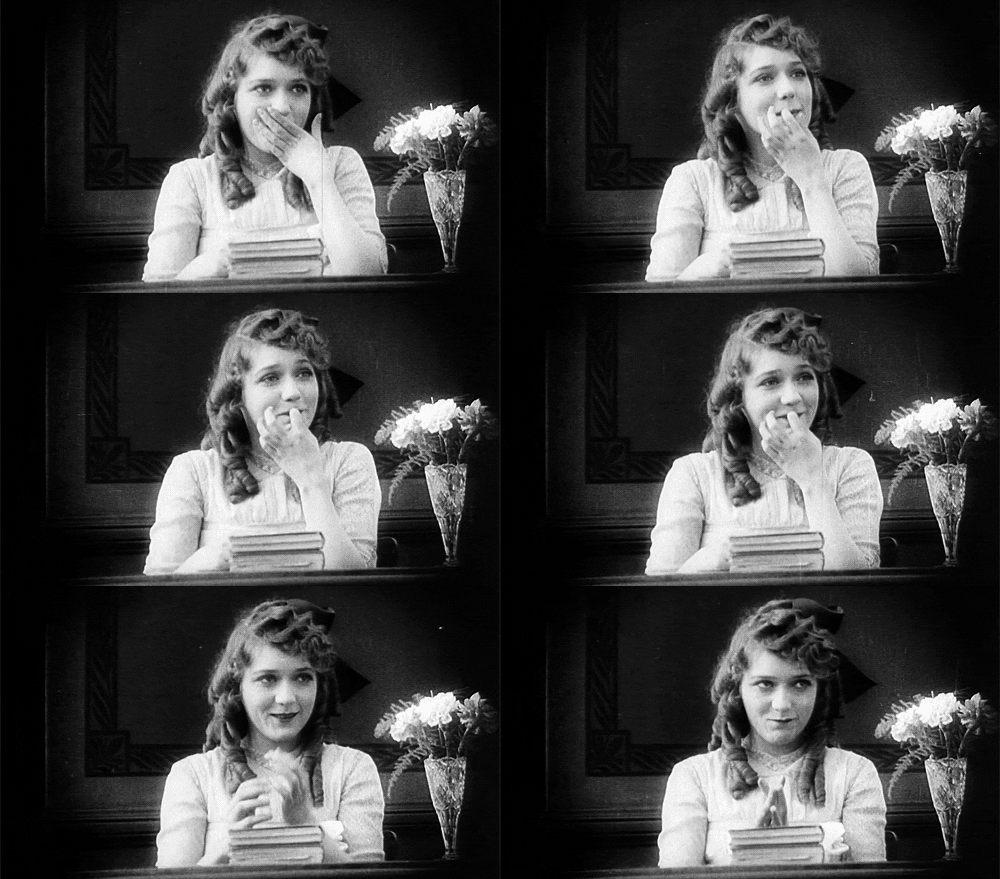
Dr Gardner Quincy Colton, died August 9, 1898, in Rotterdam, Holland. He had been visiting Europe, and preparing to return home when he succumbed death, brought on by old age.


DID YOU KNOW....

"Laughing Gas" is also used as an oxidizer in rocket propellants, and in motor racing to increase the power output of engines. At elevated temperatures, nitrous oxide is a powerful oxidizer similar to molecular oxygen.


Mark C. Marchbanks, D.D.S., gave  this list, entitled, "Things that May Surprise You about Nitrous Oxide" on April 1, 2014:

"There is a lot more to nitrous oxide than just its use as a sedative. It may be unusual to say this about a gas, but there are a lot of interesting facts about it…

Bacteria in oceans and soil emit nitrous oxide.

The discovery that nitrous oxide helps to relieve pain happened in 1800, but it wasn’t really used for that purpose until 1844, and wasn’t widely used by dentists until the 1860s.


It is nicknamed “laughing gas” because of so-called “euphoric” effects of inhaling it. If you aren’t laughing up a storm after inhaling nitrous oxide, you may be reacting to it by just acting sleepy.

Most people usually experience five stages of sedation: light-headedness, a tingling sensation in the arms and legs, a warm feeling, a feeling of euphoria, and then a sleepy feeling.


“Laughing gas parties” with nitrous oxide were all the rage for the British upper class in the late 1700s.

Nitrous oxide is used in the food industry as well. It helps to give aerosol whipped cream volume. It is used in cooking spray as a propellant. It is used in bags of potato chips so the bags are puffy, which prevents your chips from being crushed.

Nitrous oxide can be used by women in childbirth, and is being used more and more often in hospitals and birthing centers. It doesn’t get rid of the pain, but it does take the edge off a bit. Many women like it because it can be used at any time during labor, there are no serious side effects, it doesn’t require an IV or catheter, and they can still move around during labor.

Nitrous oxide is considered very safe for your child to use while at the dentist. It will help them to relax. Once it is turned off it is flushed quickly from the body, and he or she can stay awake while the dentist is filling their cavity. However, younger children may not want to wear the mask for nitrous oxide, and it may make some children may feel nauseous.

The exact mechanism of how nitrous oxide works isn’t really understood. It seems to act on the brain in many different ways at once.


Many dentists offer scented nitrous oxide to their patients, which may include strawberry, vanilla, mint, or other scents to choose from.

Nitrous oxide works rapidly, and can relax a patient within 3 minutes. It is eliminated from the body about as quickly.

Patients who are afraid of needles may find that nitrous oxide relaxes them enough to face that needle poke.


If you are having nitrous oxide you may not want to have a big meal before you head to the dentist. A big meal combined with nitrous oxide may result in nausea. However, your stomach shouldn’t be empty either—a small meal hours before your appointment is best.
Nitrous oxide is cheaper than IV sedation.

No one is allergic to nitrous oxide. It is safe for those who have diabetes, epilepsy, liver, heart, or cerebrovascular disease, although if you have a respiratory disease you should discuss that with your dentist.

Tuesday, June 7, 2016

The Gemini and the Twin

GEMINI


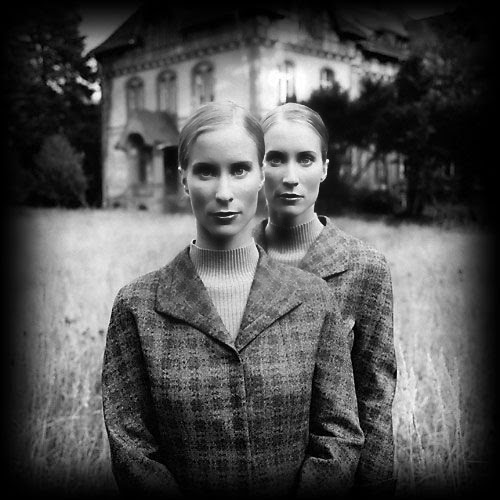
Optical illusions with photography:

Those born in the range between May 21st to June 20th are born under the astrological sign of Gemini, also known as the Twins.  Common characteristics include a powerful intellect, natural creativity (or drawn to the arts) and sharp wit.  


During their early years, the Gemini can have flighty notions, which may include a lot of day-dreaming and can be subject to addiction at an early age, because they are easily influenced. These traits can be detrimental to this sign as they constantly strive to be  "people-pleasers", which means it is often difficult to strike a balance within themselves as they struggle for social acceptance. They may also battle internally, against right and wrong; or, good and evil.  Bad decisions weigh heavily on the mind and conscience of Geminis.


As the Twin matures, or advances through the school of hard-knocks, Geminis become absolutely fierce in their loyalties, and their naturally high-tuned brains help them to advance personally and professionally; yet, they may suffer internally as depression, anxiety and worry may be constant factors in their daily lives.  The twin's mind is sharp and operates very quickly.  Ideas continually flood their minds which they like to express to others, while some may write out their feelings and thoughts.  The Gemini's heart is always in the right place, but their nervous energy can make others uncomfortable.  She/he may sense this and feel tortured as the result, as they are commonly natural empaths.  These dualistic traits makes them frequently known as the most misunderstood sign.

A few notable Geminis:  Marilyn Monroe, Johnny Depp, Prince, Hedda Hopper, Patty Lebelle, Bob Dylan, and Queen Victoria 

TWINS


Twins are two beings that are produced by the same pregnancy.  The births can be "monozygotic", which means identical; or, "dizygotic", meaning fraternal or that they developed from two different eggs. In regard to the fraternal twins, each twin is fertilized by its own sperm cell.  Due to the rarity of these births, twins are still, in someways considered a human oddity.  Here are some examples of more unusual or notorious twins.


Most recently, if you are a fan of American Horror Story, you may have tuned into the subtitled series "Freaks", in which Bette and Dot Tattler are conjoined, yet have conflicting personalities and motives.  They demonstrate that two heads aren't necessarily better than one. 

Pip and Zip (Elvira and Jenny Lee Snow) Sisters from Georgia, they suffered from microcephaly, a disorder that causes the circumference of the head to be abnormally small. In the language of the side show, they were “pinheads.” Jenny Lee was 12 years younger, but had the intelligence of a 18 month old child. Elvira was about a five year old equivalent.:

Pip and Zip (Elvira and Jenny Lee Snow) Sisters from Hartwell, Georgia, were born with "microcephaly" a disorder that caused the circumference of their heads to be abnormally small.  Their parents lent them various traveling shows, and they were billed as Twins from the Yucatan, and gave rise to the term "Pinhead".  They toured around the world with the World Circus Sideshow for a few decades.  They are most noted for their work in a 1932 movie, entitled "Freaks", by Tod Browning.   It is interesting to note that Jenny Lee was 12 years younger, and determined to have the intelligence of a 18 month old child. Elvira's IQ was equivalent to a five year old child.


In the still popular and classic horror movie, "The Shining", actresses Lisa and Louise Burns played the ghosts of the murdered Grady daughters, portrayed as identical twins; however, the characters in the book, written by Steven King, are sisters, not twins. 


The "lovely" Primwaddle Twins, Mort and Harvey, circa 1929. Their mother, Discordia's husband left after seeing the homely pair. Embittered to men, left alone to raise boys, she insisted they were girls, and got away with it home-schooling them for 17 years; until Mort learned otherwise. The teenagers murdered her in her sleep, strangled in chiffon, here eyes gouged out and replaced with doll eyes.:

"The "lovely" Primwaddle Twins, Mort and Harvey, pictured here, circa 1929. Their mother, whose name was Discordia gave birth and her husband left after seeing the homely pair. Embittered to men, left alone to raise boys, she insisted they were girls, and got away with it home-schooling them for 17 years; until Mort learned otherwise. The teenagers murdered her in her sleep, strangled in chiffon, her eyes gouged out and replaced with doll eyes." - Source: psychological warfare - Pinterest


Swedes, Ursula and Sabina Eriksson, who were born in 1967 are identical twin sisters who came under the spotlight in England during the month of May in 2008 for suffering from an episode of "shared psychosis" (folie à deux) in which they had been traveling through Ireland to England on a bus-coach, which ultimately led to murder.   The psychosis is a rare psychiatric disorder in which delusional beliefs are transmitted from one individual to another.  Read about their strange behavior here.


Chang and Eng Bunker were conjoined twins born on May 11, 1811, also known as "Siamese Twins" which occurs when either of the identical twins are born with some part of their bodies connected with reflects the incomplete division of the producing ovum. The Bunkers’ bodies were joined at the sternum and at the breast bone.  They moved to America, and each married and had many children.  When Chang died from complications arising from bronchitis (and possibly alcoholism), Eng died just three hours later. 


Also conjoined, The Hilton Sisters - Daisy and Violet, also toured the Sideshow circuit in the 1920's.

Luke and Leia - Something this epic, defies explanation

Each photo, below, leaves me feeling somewhat haunted and I can't help but wonder what their every day lives were like.  (All images are from Pinterest.)


Daddy with Twins:


Twins


Twins. Undated:

Identical Twin Girls in Bows. I guess leggings and boots are not a new trend!:

Diane Arbus.:

Thai twins with big beehives in Amsterdam in the 60's.:

Twins.:

I, Gemini

Born on a crimson cloud
in divided spaces, 
extracted from an ebony womb;  
the androgynous spirit with two faces.
Turquoise eyes, so foolish and so wise.

From restlessness grows serenity,
Duality is my reality;
I am nothing, yet everything. 
From cocoon to caterpillar, 
exploding butterfly, I rise;
For, I am Gemini.

Twice bitten;
The Huntress and the Prey,
I am the dyadic Sisters 
born in merry month of May.

Sitting in sunshine and in shadow,
'twix and 'twain,
You may find me in the celestial skies
or in the flames below...
But only I shall know.

I am the ambivalent Janus,
Holding all doorway keys;
one to war, and one to peace.

 I, Gemini.
The virgin and the whore;
One of chastity, 
and one of more.
The malignant benign.

And, in the deafening silence,
I sit alone together
In  jovial tranquility with my friends, 
cruel kindness and sweet agony;
Dropping balloons made of lead
among the living dead.

©Denise Goodwin, All Rights Reserved

Monday, January 18, 2016

America's Grandma

At the age of 76, her hands were crippling with arthritis, she could no longer hold a sewing needle to stitch embroidery. 


Anna Mary Robertson Moses
(September 7, 1860 – December 13, 1961)
Undaunted, as she could not be idle, she discovered that could hold a paintbrush and "Grandma Moses" was born.

Source: wikipedia
Anna Mary Robertson was born in Greenwich, New York, on September 7, 1860.  She was the third child born to Russell King Robertson and Margaret Shannahan, who had seven more children following Anna.  Before her death, at age 101 in 1961, Anna was interviewed many times and stated that her childhood was very happy though hard work was necessary growing up on a farm.  Her father ran the farm, as well as a flax mill in Greenwich, which is located slightly less than 20 miles east of Saratoga Springs.  


Anna Mary worked on her father's farm until she was 12 years old, at which time she took employment on a nearby neighbor's farm to help support the large family.  She has been referred to as a "hired girl" during that time in her life.  She recounted that the work was beneficial as she received an alternative education, "in cooking, house keeping, in moralizing and mingling with the outside world…”


School attendance was sparse, as her family could not afford warm clothes required for travel during cold months, so she could only attend school for three months of the year, during warmer weather.  The school that she attended is now the site of the Bennington Museum, which houses the largest collection in the world, of Grandma Moses work.

In her own words, recalling her childhood, Anna Mary wrote, 

“…I Anna Mary Robertson was born back in the green meadow and wild woods, on a Farm in Washington, Co., in the year of 1860, Sept 7, of Scotch Irish Paternal ancestry.   Here I spent my life with mother Father and Sisters and Brothers, those were my Happy days, free from care or worry, helping mother, rocking Sisters cradle taking sewing lessons from mother, sporting with my Brothers, making rafts to float over the mill-pond, Roam the wild woods gathering Flowers, and building air castles…”
  

Her father, a Methodist, but did not attend church most likely due to his farm duties, so he opted to walk with his children in the woods.  I think it would be safe to assume that this is from where Grandma Moses drew the nostalgic images in her mind that landed on the many canvases she painted.   As a child, she and her 5 brothers and 4 sisters all loved to draw, and her father would bring home large pieces of paper on which they colored scenes of their rural life. 

As a child she used natural mediums to create her art, using lemon and grape juice to create colors for her scenes, which as a child, called "lamb-scapes".


"The Olden Oaken Bucket"
Working the neighbors farm also brought love.  When Anna Mary was 17 years old, she married a hired farm hand by the name of Thomas Salmon Moses in 1887, in Hoosick, New York.  Anna Mary was the housekeeper. 


Thomas Salmon Moses - wedding picture
Anna Mary Moses - wedding picture
The couple honeymooned in North Carolina, and as they made their way back to New York, they were presented with the prospect of purchasing a farm in Virginia.  They paid $600 for it, and remained for the next 20 years.  On this farm they had ten children, and due to poverty, lack of adequate medical care and simply the statistical rate of death during that era, only five of those children survived.  To supplement their income, Anna Mary made butter and home-made potato chips that she sold locally.  


With two of her children
In 1918, she painted over a large fire-board in the parlor, because she had ran out of wallpaper while decorating.  She wanted to finish the room so she put white paper on the wall and commenced to creating a mural of sorts.  This piece survives and is known as the "Fireboard".  Today, it is displayed at the Bennington Museum in Bennington, Vermont. 

After these two decades passed, the couple returned to New York, and again, took up farming at Eagle Bridge.  Ten years later, Thomas died of a heart attack in 1927. 


In 1932, Anna Mary traveled to Bennington, Vermont to care for her daughter, with the same name (Anna), who was ill with tuberculosis.   It is here, that her daughter suggests that Anna Mary take up embroidery to pass time.  Her embroidery is referred to as "worsted" sewing, as her stitches were embroidered onto wool.   Her daughter passed away, and Anna Mary stayed for an additional three years to care for her grandchildren.


In 1935, she returned to Eagle Bridge, in New York, where her son, Hugh and his wife, Dorothy and their children, operated the family farm.  It is said that at the age of 78, she began to create her "old timey" paintings, "in earnest".  She was also fond of making berry preserves and other baked goods, which she brought to county fairs and local events to sell.  Her jam won a blue ribbon, however, no one looked twice at her art work.  


Her work is described as primitive, and at that time, her work was created on old sturdy piece of cardboard.  Today, in some art circles she is noted for being the original folk artist.   She continued to paint in her own style, with her own rules and her work is displayed in the window of Thomas' Drugstore in Hoosick Falls, New York.  


In 1938, Louis Caldor, an amatuer collector of art and an engineer, discovered her work telling Anna Mary that he would make her famous.  He mailed her the first canvases and professional paints that she ever used.


A year later, Caldor took three of Anna Mary's paintings to an art show, with little results, as it was not a public event.  Also, those viewing the paintings were not likely to commit time or money to an almost 80 years old woman.  


Another year passed, as Anna Mary continued to create her paintings, and Caldor still saw the value in her work.  He brought them to a gallery owner in New York City by the name of Otto Kallir, who shared his interest and saw the artist's potential. 


He opened a show in Anna Mary's honor entitled, "What a farm wife painted" during the month of October.   In November, Gimbel's Department Store featured her work in an event called "A Thanksgiving Festival" and it was there, the public was introduced to Anna Mary.  Grandma Moses' wit, old fashioned charisma and charm captured the hearts of the public and press, alike.  She was an instant hit and she became an American icon.  As we say, she was an overnight sensation.  


Her art was mostly created from both her memories and what she lived, through her own experiences.  She never really used an easel, preferring to use her lap or a table top, instead. 


Her country style of art depicts scenes of people doing farm chores, and every day rural events.  She also painted historic events.  Her work has been shown around the United States and Europe, and now the Bennington Museum in Vermont houses the largest collection of Grandma Moses work in the world. 


Anna Mary Moses died in 1961, at the age of 101.  It is said that she created over 1,000 paintings.  Her work is found printed on fabrics and used as post and greeting cards. 


 She is honored on a U.S. postage stamp.  Her face was on the cover of LIFE and TIME magazines.   Her life's story and art appears in several published books and found on educational material in video.


All I can say is.... I wish I could have met this high spirited woman, and looked into her sparkling grey eyes, just once.