{ font: $(body.font); color: $(body.text.color); background: $(body.background); padding: opx; $(body.background.override) } expr:class='"loading" + data:blog.mobileClass'>
Showing posts with label Burial. Show all posts

Saturday, June 11, 2016

Vampire Defense


“Evil is a point of view. We are immortal. And what we have before us are the rich feasts that conscience cannot appreciate and mortal men cannot know without regret. God kills, and so shall we; indiscriminately He takes the richest and the poorest, and so shall we; for no creatures under God are as we are, none so like Him as ourselves, dark angels not confined to the stinking limits of hell but wandering His earth and all its kingdoms.”  ― Anne Rice, Interview with the Vampire


The vampire is a loathsome creature, who appears in human form, and is sustained by drinking the blood (also known as "feeding") from living beings, like you and I.   Naturally, we want to defend ourselves from an immortal existence and there are many ways in which we can employ self-protection.


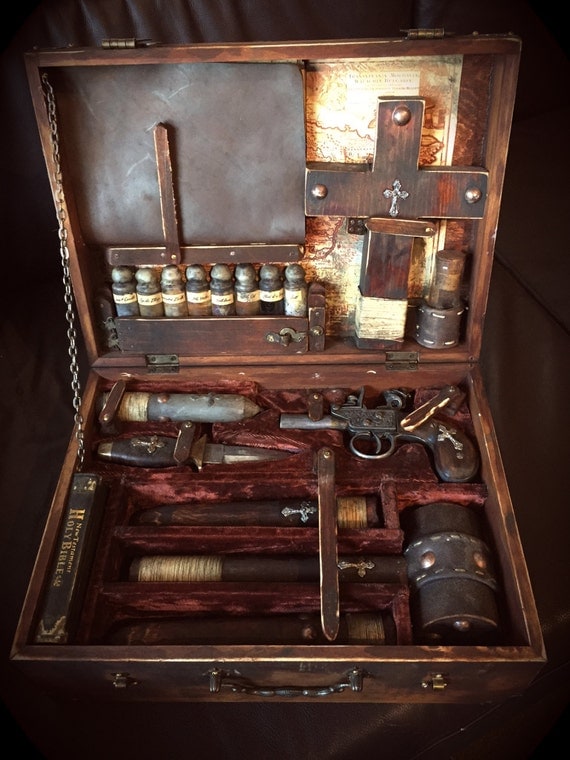
Today, one can easily find, online at auction or generally for sale, "Vampire Hunter Kits" - also known as - "Vampire Defense Kits".  Some kits may be vintage, but are not actually an authentic tool used during the height of this superstition.   These kits are most likely made in the 1930's or perhaps even later and were made to look older than they actually are.   These kits can even be "made to order", today.  Speculation is that they were produced after the publication of Bram Stoker's "Dracula" in 1897, and were more likely intended as souvenirs or novelties.    Buyer, Beware!


If the contents were indeed real, here are the many ways in which you may use to defend yourself against the un-dead. There are also many superstitions that may grant you some form of protection against these evil beings.  

"Apotropaics" or apotropaic magic are a means in which one may defend against evil or harm, and may deflect misfortune.  If you have a lucky charm, or sprinkle salt over your shoulder, or hang a horseshoe over your door, you are practicing this type of magic!  Common items, such as garlic or holy water that are supposedly used to ward off those who returned from the dead and are common in vampire folklore. 


Branch of a wild rose - may harm or ward off a vampire


Candles

Used for ceremonies like exorcisms, prayers, and seeing in the dark.


Crossbow and Bolts

Crossbows were useful when employed for range.  The tip of the bolt may be dipped in silver, however, silver is not effective means to ward off the vampire. 


Crucifix

A symbol of Christ, it was commonly held facing toward the vampire, who balked in its presence. Sometimes, it was attached to a chain from which the slayer could rapidly pull it out.  The crucifix was often made of silver.   This tool is one of the most important manners in which one can repel a vampire, and if it touches the skin of the undead, it will burn them similar to an acid.


Decapitation / Dismemberment

One of the easiest methods to kill a vampire is to simply lob off its head, and then to burn it along with the remaining body (which should also be dismembered). See "Fire". Decapitation was also the means in which one could expedite the departure of one's soul. 


Entry

It is common knowledge that a vampire will not enter your home, unless you invite him/her.  Once the invitation is extended, however, they may enter or leave at will. 


Eucharist 

Holy wafers are used to place over the lips of the dead, as a form of protection against vampirism; or, may be placed around the grave as a circle of protection so that the undead may not enter. 


Fire

The method of burning a vampire is used in conjunction with the decapitation and dismemberment method.  After the body is in pieces, the remaining parts must be thoroughly burned. 



Garlic

Garlic has been used in defense against vampirism, as they notoriously despise this herb and repel against it.  Consequently, garlic was placed into a deceased person's mouth to prevent a vampire from feeding upon the victim.


Graveyard

A vampire will not be able to use his power on consecrated grounds such as a church yard or a cemetery.  You will be safe to retreat to these places.


Hammer

Some hammers were fashioned with a crucifix styled into the head. Its size was approximately six to seven inches long, and was what is used to drive a stake into the body of the vampire.


Holy Water

This was used to sprinkle on the vampire for both protection of the hunter, the surrounding area in which they occupied, or used directly on the vampire to harm it.


Incense

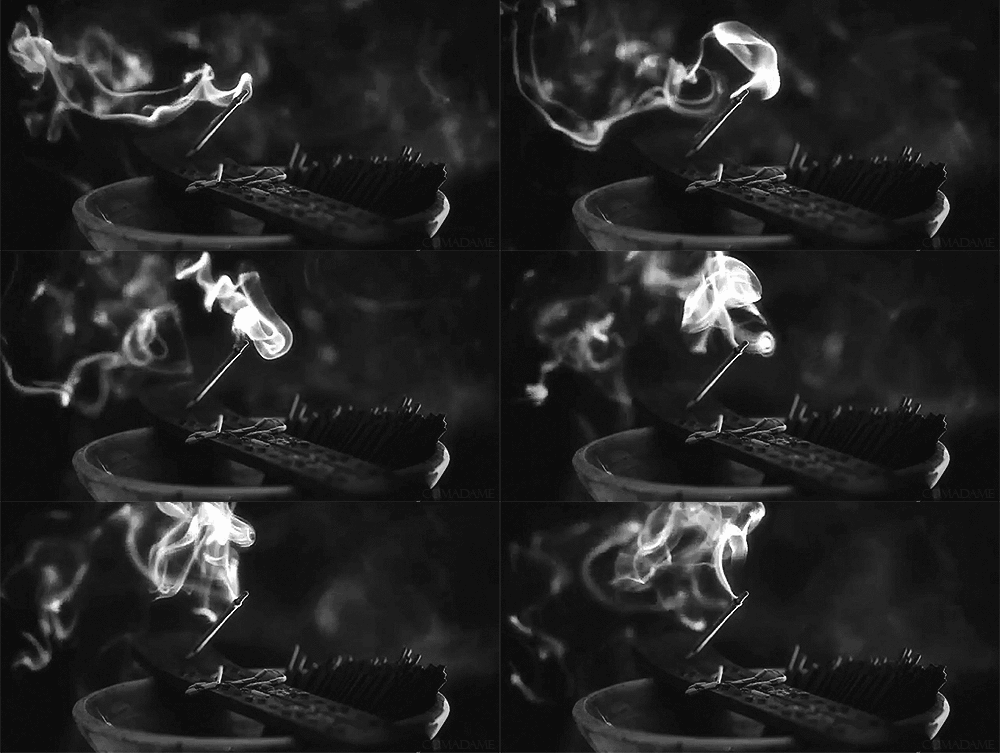
The pungent odor arising from this may have been used ceremoniously, whether it be used for protection or to ward off the evil spirit which lay in the vampire’s body.


Knives and Daggers

Some were used for throwing while others were specifically used for close combat.


Lemon

In Saxon regions of Germany, a lemon was placed in the mouth of suspected vampires.


Metal Teeth Pliers

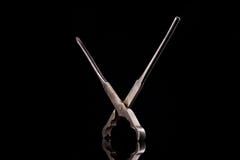
Nothing more than a common tool, these were used to remove the long teeth or fangs of vampires.  


Mirrors

Mirrors are used to ward off vampires when placed facing outwards, on a door.  You can also verify if the individual is indeed a vampire, as they do not have a reflection, or they may not cast a shadow which helps to substantiate their lack of having a soul.    


Mustard Seed

Sprinkled over the roof of one's home will protect you against these intruders.


Oils and Ointments

Commonly used as repellents, any consecrated oil or ointment can be used to place directly on oneself or an object


Prayer Book or Bible

Holy verses, quotes or readings may be used for performing exorcisms.


Pistols

Everyone knows that bullets do NOT kill vampires.  Bullets - exclusively silver bullets - are used to kill werewolves, never vampires.
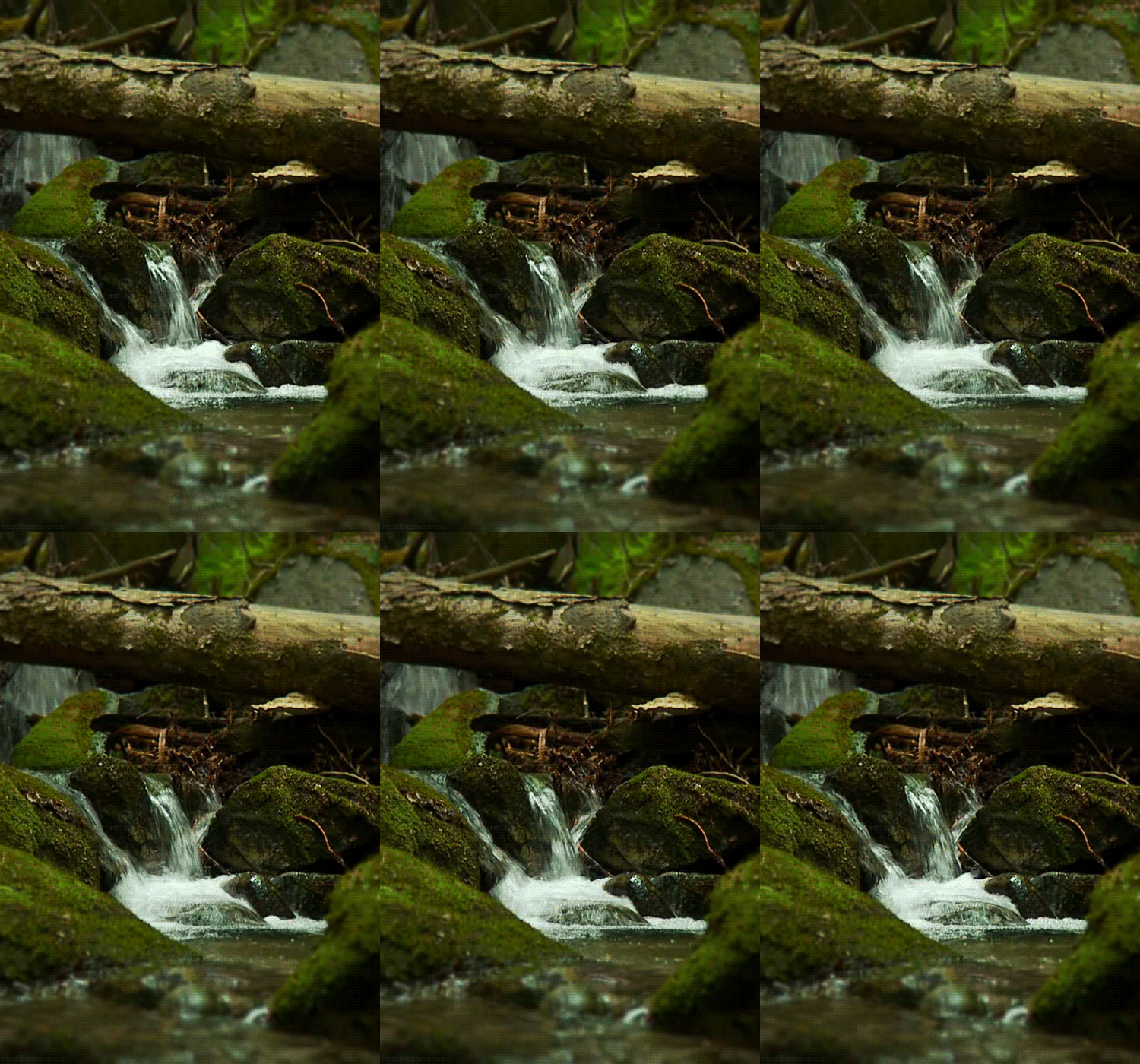


Running Water

Such as a brook or stream - vampires will not cross either.  I would caution you, however, to not rely on this as a means of defense, as a vampire can not only change forms, such as transforming into a bat or wolf, I would suggest that there is no reason why he would not leap over running water, if his thirst was great; or perhaps, his anger, high.


Stakes

Stakes were driven into the hearts of the vampires by use of the hammer.  A suspected vampire's grave could be unearthed and a stake would be driven through the corpse, to pin it to the ground. Holy water, Eucharists, and/or oils or ointments could be administered directly onto its body to prevent it from reanimating and could be either driven through the mouth, the heart or the stomach depending upon from what region the superstition came.  Popular choices of wood to make stakes were Ash, Hawthorne or Oak.



Sunlight

One of the most vulnerable aspects of a vampire is to expose them to sunlight, which may disintegrate them, instantly.  This is why they are only active at night.


Here is my shadow... from the streets of Chicago...


...and, here I am, also in Chicago, - and my reflection is real.  Whew!  Glad we got that nasty piece of business out of the way!

Tuesday, November 3, 2015

A Tomb with a View

"To be buried while alive is, beyond question, the most terrific of these extremes which has ever fallen to the lot of mere mortality."  
~ Edgar Allan Poe, 1850: "The Premature Burial" 
heavymetalartwork.com
Dr. Timothy Clark Smith's unusual grave can be found in New Haven, Vermont, and his grave (and other's like it) is the subject of today's post.  

He was an educated man, who had traveled the world.  He received a Bachelor's degree from Middlebury College, and became a doctor upon graduating from the University of New York in 1855.  He "worked as a teacher, clerk in the US Treasury Department and physician. He was a staff surgeon for the Russian Army from 1856 to 1857. Smith was US Consul in Odessa, Russia from 1861 to 1875, and Galatz, Romania from 1878 to 1883." 

Dr. Smith suffered from Taphophobia, which means he was deeply fearful of being buried alive. More precisely, he feared being buried alive, as the result of obtaining some form of a sleeping sickness which would ultimately be falsely determined that he died.

"The Raising of Lazarus"  Rembrandt
His fear was not entirely irrational, however.  "Vivisepulture" is to be buried while still alive.  During  the 1800's, there was a rash of epidemics like cholera, smallpox and even the plague, and contemporary medicine as we know today, had not yet been perfected.  Now known as the Lazarus Phenomenon, diseases of the heart, though rare, could sometimes fool an attending physician into thinking the heart had stopped, and he may pronounce an individual dead.  Then that individual would naturally revive or return to life.

odd nerdrum, buried alive
The gruesome reality, mostly during the mid 1800's, was that there were over 200 recorded episodes of people "almost" being entombed and almost 150 cases of actual live burials!  And the horror continues with 10 people being dissected before they were actually dead, and 2 incidents where embalming procedures began on the living!

For many during the Nineteenth Century, the fear of premature burial became an obsession, after several people were pronounced dead, and during their wake or funeral, suddenly returned to life from a comatose or unconscious state.  These stories, were highly publicized in newspapers across the country, and the macabre Victorians took the only action they could - allowing bodies to stay lying in wait for days and even weeks on end - to ensure their death.
"The Death of Albine", by John Coliier
Some, with the financial means to prepare for the event of accidental burial, devised elaborate tombs in which a bell was installed over the head of the deceased and a cord which lead from the bell was placed in the body's hand; hence, any movement from within would signal an alarm.  

Source:  eduexplica.com
Other patented inventions included the "safety coffin" which consisted of a "movable periscope-like pipe which provided air and, when rotated or pushed by the person interred, indicated to passersby that someone was buried alive." 
When one considers decomposition and gravity, much like the proverbial tree in the forest, the bell probably did ring, but  would there be no one there to hear it?

Upon installing pipes that were concocted for the purpose of listening for any returning signs of life, the rich may have employed attendants to wait near the tombs, lest a bell would ring or a voice to be heard, so that they could run or call for help. 

Others who were less fortuante, financially, had simpler means of assisting anyone who came back to life by placing shovels and/or crowbars in caskets.  

I shudder to think of how a weakened body, most likely suffering from oxygen deprivation and dehydration, and at the discovery of being trapped in complete darkness - the extreme psychological fear that one would experience, how they  could excavate themselves from under 6 feet of dirt, would indeed be indicative of Lazarus.

Image (cropped) from roadtrippers.com
So, perhaps Timothy Clark Smith's fears were not so irrational, after all.  How else can I describe his own grave planning, than "facing his fear"?  He designed his own "safety grave", by rigging his tomb so that his hand would rest on a bell and from this coffin extends a breathing tube.  Directly over his head he installed a window, so that one may peer down into the grave to look at him and ensure that he was really dead.  

unknown source:  google images
"Because he feared being buried alive, he was interred in a specially designed grave. His face is positioned beneath a cement tube that leads from beneath the ground to the surface, and ends at a 14x14 inch plate glass window. In addition to arranging Smith so he could see the surface if he was alive, he was buried with a bell in his hand so he could signal for help." -Source:  findagrave.com

According to my research the actual burial vault has an arched stairwell, that is covered with stone in the lower part of the mount.  It leads to two rooms.  One room for his beloved wife, and the other containing the remains of Timothy Clark Smith which was constructed with the "viewing window" at the top of the shaft.  

Source:  findagrave.com

Source: sevendaysvt.com
As you can see, today, the window has a greenish, mossy appearance, with a good deal of condensation that has collected over the years.   While the window was in pristine condition, it is said that one could peer down to look upon his skeleton, and lying next to him was a hammer and chisel.  It is also entirely unclear as to whether or not a bell was installed in this grave, and his hand placed upon a rope connected to it.  

Dr. Timothy Clark Smith's grave is located in the Evergreen Cemetery in New Haven, Vermont (near Middlebury).

An example of a "Mortsafe"

To read about how some graves were designed to keep bodies "in" the grave, you can read about the Mortsafe on Vermont DeadLine, here.

Monday, April 27, 2015

Elmwood Cemetery, Barre, Vermont

"In 1808 the Congregational Church building was completed in Gospel Village.  At that time Ezekial Wood, a deacon of the church, donated four acres of his farm for a church-yard burial ground.  In 1854 the plot was expanded in size and appropriately named Elmwood Cemetery because of its stately trees. Again in 1920 there was a need for further expansion to the present size of approximately twenty-one acres.

Elmwood holds much historical interest.  The early residents of Barre are interred here: The first doctor and his son, Robert and Lyman Paddock; the first settlers, John and Rebeckah Goldsbury; the first Congregational minister, Rev. Aaron Palmer; Robert Parker, the first quarrier and a Revolutionary soldier; Joshua Thwing, the owner of the first iron foundry and mill; and many more men and women who contributed to the development and growth of Barre and Central Vermont."

Source: homepages.sover.net/~cemetery/ElmwoodCemetery

These photos were taken last October (2014), I forgot that I had them until I began looking through some old files this evening.  I hope that you enjoy this pictorial post!